CBSE Class IX Beehive Lesson 7 - Packing
By Jerome K Jerome (an extract from Three Men in a Boat)
Introduction to the lesson
Lesson and explanation
I SAID I’d pack.
The writer, Jerome liked to pack luggage for trips and announced that he would do the packing.
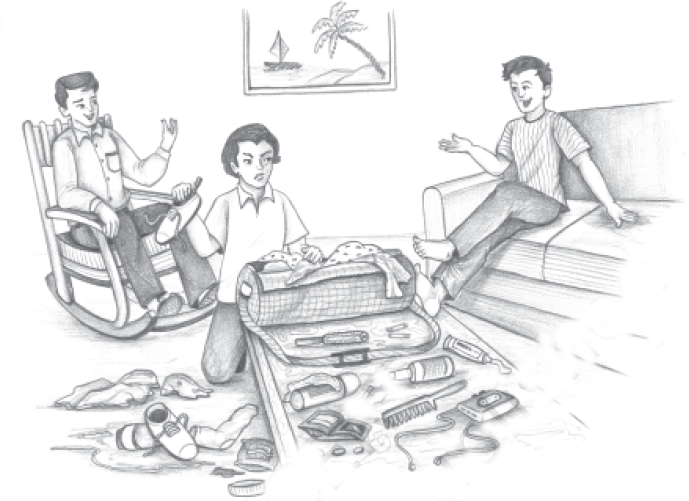
I rather pride myself on my packing. Packing is one of those many things that I feel I know more about than any other person living. (It surprises me myself, sometimes, how many such things there are.) I impressed the fact upon George and Harris and told them that they had better leave the whole matter entirely to me. They fell into the suggestion with a readiness that had something uncanny about it. George spread himself over the easy-chair, and Harris cocked his legs on the table.
pride myself on: am proud of
fell into: here, accepted
Uncanny: strange, weird
cocked his legs: bent the legs on the knee as he sat
Jerome thought that his ability to pack luggage was better than others. He asked his friends George and Harris to leave the task of packing to him. The two friends agreed to his offer instantly which was strange. George sat comfortably on the easy - chair and Harris bent his knees as he sat on the sofa and kept his feet on the table.
This was hardly what I intended. What I had meant, of course, was, that I should boss the job, and that Harris and George should potter about under my directions, I pushing them aside every now and then with, “Oh, you!” “Here, let me do it.” “There you are, simple enough!” — really teaching them, as you might say. Their taking it in the way they did irritated me. There is nothing does irritate me more than seeing other people sitting about doing nothing when I’m working.
Intended: planned, meant
potter about: do some unimportant things
By saying that he would pack, the writer did not mean that his friends would sit and relax while he would do all the work. He had meant that he would boss upon them while they would do all the chores. He would nag them and curse them for not knowing the work well and then, he would chip in to sort out the mess that they would create.He was irritated to see them sitting while he did all the work.
I lived with a man once who used to make me mad that way. He would loll on the sofa and watch me doing things by the hour together. He said it did him real good to look on at me, messing about. Now, I’m not like that. I can’t sit still and see another man slaving and working. I want to get up and superintend, and walk around with my hands in my pockets, and tell him what to do. It is my energetic nature. I can’t help it.
loll on the sofa: to recline or lean in a relaxed manner
messing about: to waste time doing something without a particular purpose
sit still: sit without doing anything
Superintend: supervise, manage
He recollects that once he lived with a man who would sit lazily on the sofa all day through and would watch the writer do all the work. The man would say that he enjoyed watching him go around, doing all the work. This would make the writer mad with anger. The writer adds that he could not sit idle and watch others work like slaves. On the other hand, he liked to check their work, walk around with his hands in his pockets and direct them on how to do the work properly. He feels that as he was energetic, it was a part of his nature to behave in that manner.
However, I did not say anything, but started the packing. It seemed a longer job than I had thought it was going to be; but I got the bag finished at last, and I sat on it and strapped it. “Ain’t you going to put the boots in?” said Harris. And I looked round, and found I had forgotten them. That’s just like Harris. He couldn’t have said a word until I’d got the bag shut and strapped, of course. And George laughed — one of those irritating, senseless laughs of his. They do make me so wild.
strapped it: closed it
Wild: mad with anger
The writer did not say anything to his friends and started packing. As he closed it, Harris said that he had forgotten to pack the boots. The writer felt that Harris could have reminded him before he had closed the bag but he thought that Harris was like that! This was followed by an irritating laughter by George which made Jerome wild with anger.
I opened the bag and packed the boots in; and then, just as I was going to close it, a horrible idea occurred to me. Had I packed my toothbrush? I don’t know how it is, but I never do know whether I’ve packed my toothbrush.
Jerome opened the bag to keep the boots in it. As he was about to close it, he was struck by a strange thought that had he kept the toothbrush or not. He says that he never remembers if he has packed the toothbrush or not.
My toothbrush is a thing that haunts me when I’m travelling, and makes my life a misery. I dream that I haven’t packed it, and wake up in a cold perspiration, and get out of bed and hunt for it. And, in the morning, I pack it before I have used it, and have to unpack again to get it, and it is always the last thing I turn out of the bag; and then I repack and forget it, and have to rush upstairs for it at the last moment and carry it to the railway station, wrapped up in my pocket-handkerchief.
Haunts: to repeatedly give trouble
Misery: sad
cold perspiration: sweat
Hunt: search
Jerome adds that while travelling, he always messes up with carrying his toothbrush. He has nightmares of not having packed it, wakes up in sweat and looks for it. In the morning, he packs it before using it, then unpacks the bag to get the brush and uses it. As it is the last thing that comes out of the bag and he has repacked the bag, he forgets packing it again. At the last moment, he rushes to his room to get the brush and, finally, he wraps it in his handkerchief and carries it to the railway station in his hand.
Of course I had to turn every mortal thing out now, and, of course, I could not find it. I rummaged the things up into much the same state that they must have been before the world was created, and when chaos reigned. Of course, I found George’s and Harris’s eighteen times over, but I couldn’t find my own. I put the things back one by one, and held everything up and shook it. Then I found it inside a boot. I repacked once more.
mortal thing: every ordinary thing
Rummaged: searched in a hurried or careless way
Chaos: confusion
Reigned: ruled
As Jerome was looking for his toothbrush in his bag, he had to remove everything but he could not find it. He created a mess. He found his friend’s brushes many times but could not find his brush. He kept everything back into the bag one by one, shaking each item, and finally, found the brush inside a boot. Then once again, he repacked the bag.
When I had finished, George asked if the soap was in. I said I didn’t care a hang whether the soap was in or whether it wasn’t; and I slammed the bag shut and strapped it, and found that I had packed my spectacles in it, and had to re-open it. It got shut up finally at 10.05 p.m., and then there remained the hampers to do. Harris said that we should be wanting to start in less than twelve hours’ time and thought that he and George had better do the rest; and I agreed and sat down, and they had a go.
didn’t care a hang: show no concern or interest
Slammed: shut the lid forcefully and loudly
Hampers: baskets used to carry food, utensils, etc.
Now when Jerome closed the bag, George asked if the soap was there inside it. As Jerome was impatient, he replied that he wasn’t concerned if it was there or not, closed the lid and strapped the bag. Then he realized that he had packed his spectacle in it too and had to open it again to get them. Finally, the bag was closed at 10:05PM. Then they had to pack the food baskets. Harris said that as they were left with less than twelve hours to leave, they should pack the baskets as well. Harris decided that the food baskets would be packed by him and George. Jerome agreed to take his turn for some rest while his friends packed the baskets.
They began in a light-hearted spirit, evidently intending to show me how to do it. I made no comment; I only waited. With the exception of George, Harris is the worst packer in this world; and I looked at the piles of plates and cups, and kettles, and bottles, and jars, and pies, and stoves, and cakes, and tomatoes, etc., and felt that the thing would soon become exciting.
light-hearted spirit: to be cheerful
Evidently: clearly, obviously
Exception: a person or thing that does not follow the general rule
George and Harris started packing the hampers in a happy mood. They wanted to show Jerome that they could pack well. Jerome waited for them to create a mess because he considered Harris to be the worst packer in the world. Jerome looked at the piles of plates, cups, kettles and bottles, the jars, pies, cakes and tomatoes which had to be packed into the hampers. He thought that as the boys would mess up, it would be an interesting thing to watch.
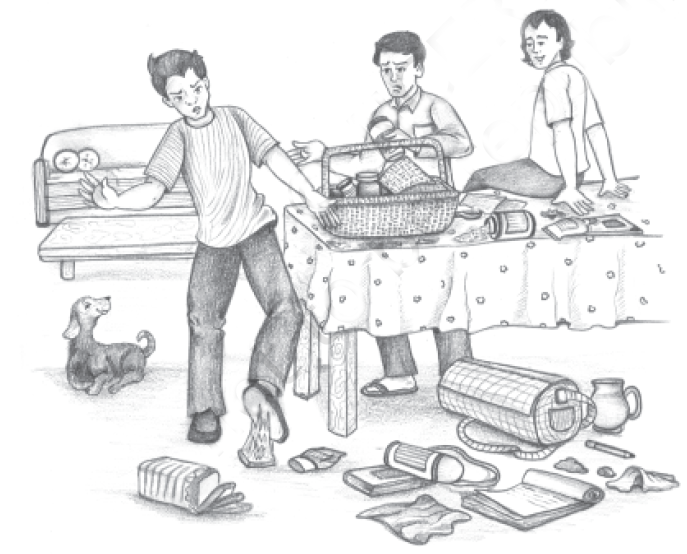
It did. They started with breaking a cup. That was the first thing they did. They did that just to
show you what they could do, and to get you interested.
The scene became interesting as they broke a cup at the start. Jerome says that they broke the cup to indicate that they could do that too and to make things interesting.
Then Harris packed the strawberry jam on top of a tomato and squashed it, and they had to pick out the tomato with a teaspoon.
Squashed: crush or squeeze something with force so that it becomes flat, soft, or out of shape
Harris placed the jar of strawberry jam on top of the tomatoes. The tomatoes were squeezed by the jar and then, they removed the damaged tomato with the help of a spoon.
And then it was George’s turn, and he trod on the butter. I didn’t say anything, but I came over and sat on the edge of the table and watched them. It irritated them more than anything I could have said. I felt that. It made them nervous and excited, and they stepped on things, and put things behind them, and then couldn’t find them when they wanted them; and they packed the pies at the bottom, and put heavy things on top, and smashed the pies in.
trod on: stepped on
Next, George stepped on the butter. Jerome remained silent but sat on the edge of the table to watch the action. His silence irritated his friends. They became nervous and stepped on the things. They kept the things behind them and later, when they wanted them, they could not find them. They placed the pies on the bottom and kept heavier things on them which smashed the pies.
They upset salt over everything, and as for the butter! I never saw two men do more with one-and two pence worth of butter in my whole life than they did. After George had got it off his slipper, they tried to put it in the kettle. It wouldn’t go in, and what was in wouldn’t come out. They did scrape it out at last, and put it down on a chair, and Harris sat on it, and it stuck to him, and they went looking for it all over the room.
Upset: overturned
Scrape: drag or pull
The boys overturned the can of salt on everything. Jerome says that they created a lot of confusion with the small piece of butter. He had not seen anyone create so much mess with butter that was worth one and two pence (meaning it was a very small piece) as they did. George removed it from his slipper and tried to put it into the kettle. As he was unable to do that, he placed it on a chair. Harris sat on it, the butter stuck to him, he stood up and both the boys went around the room looking for the piece of butter.
“I’ll take my oath I put it down on that chair,” said George, staring at the empty seat. “I saw you do it myself, not a minute ago,” said Harris.
Oath: to swear upon something
George looked intently at the empty seat on which he had placed the butter a few minutes ago. He took an oath of truthfulness that he had placed it there not even a minute ago.
Then they started round the room again looking for it; and then they met again in the centre and stared at one another.
Once again, they searched it in the room. They met in the middle of the room empty handed.
“Most extraordinary thing I ever heard of,” said George.
“So mysterious!” said Harris.
Then George got round at the back of Harris and saw it.
“Why, here it is all the time,” he exclaimed, indignantly.
Indignantly: in a manner indicating anger or annoyance at something perceived as unfair
George said that the disappearance of the butter was the most amazing thing that he had known. Harris said that the disappearance of the butter was a mystery. George saw the butter sticking to Harris’s back and said that it had been there all this while.
“Where?” cried Harris, spinning round.
“Stand still, can’t you!” roared George, flying after him.
And they got it off, and packed it in the teapot.
Harris turned around and asked where it was. George flew to Harris’s back and asked him to stand still. They removed the butter and packed it inside the teapot.
Montmorency was in it all, of course. Montmorency’s ambition in life is to get in the way and be sworn at. If he can squirm in anywhere where he particularly is not wanted, and be a perfect nuisance, and make people mad, and have things thrown at his head, then he feels his day has not been wasted.
sworn at: get scolded
Squirm: to wriggle or twist one’s body
Nuisance: to cause inconvenience or annoyance
Jerome’s pet dog Montmorency participated in all this. His aim was to interrupt everyone and then get scolded for it. Jerome adds that if Montmorency was able to twist into a place and create nuisance by angering people and get things thrown at him in return, he felt that he had utilised the day in a good way.
To get somebody to stumble over him, and curse him steadily for an hour, is his highest aim and object; and, when he has succeeded in accomplishing this, his conceit becomes quite unbearable.
Stumble: to trip over a hurdle
Curse: scold
Conceit: here, his pride in himself
Montmorency’s aim was to get people trip over him and scold him. By doing this, he felt that he had fulfilled his aim and would feel proud of his achievement.
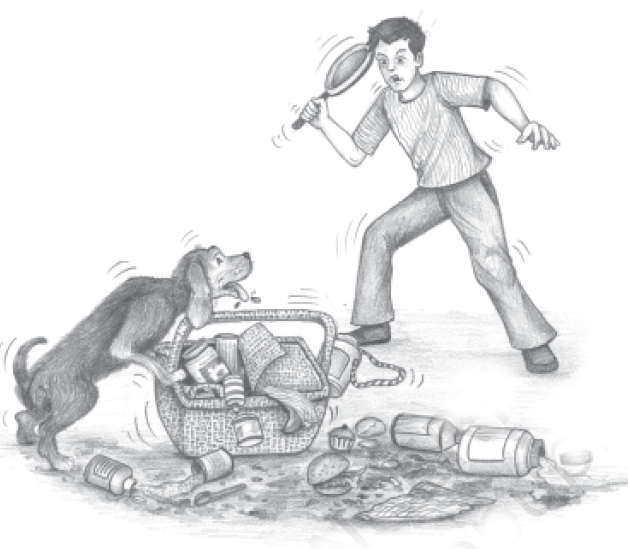
He came and sat down on things, just when they were wanted to be packed; and he laboured under the fixed belief that, whenever Harris or George reached out their hand for anything, it was his cold damp nose that they wanted. He put his leg into the jam, and he worried the teaspoons, and he pretended that the lemons were rats, and got into the hamper and killed three of them before Harris could land him with the frying-pan.
Worried: disturbed
Pretended: to behave as if something is true when you know that it is not
land him: hit or punch someone
Montmorency sat on the things to be packed. He thought that when George and Harris reached out for the things to be packed, they were reaching out for his cold wet nose and would bring it forward for them. He stepped into the jam bottle, he shook the teaspoons, he acted as if the lemons were rats and stepped into the hamper to kill these rats. He was stopped by Harris who hit him with a frying - pan.
Harris said I encouraged him. I didn’t encourage him. A dog like that doesn’t want any encouragement. It’s the natural, original sin that is born in him that makes him do things like that.
Harris blamed Jerome for encouraging Montmorency for doing all this mischief. Jerome say that a dog like Montmorency did not need encouragement. It was born to be like that and act like that.
The packing was done at 12.50; and Harris sat on the big hamper, and said he hoped nothing would be found broken. George said that if anything was broken it was broken, which reflection seemed to comfort him. He also said he was ready for bed. We were all ready for bed. Harris was to sleep with us that night, and we went upstairs.
Reflection: thought
At 12:50, they had packed the hampers. Harris sat on it and said that hopefully, nothing would break in it. George was indifferent and said that if something broke it would not matter. As they were ready for bed, they went upstairs to sleep.
We tossed for beds, and Harris had to sleep with me. He said :
“Do you prefer the inside or the outside, J.?”
I said I generally preferred to sleep inside a bed.
Harris said it was odd.
George said:
“What time shall I wake you fellows?”
Harris said:
“Seven.”
I said:
“No — six,” because I wanted to write some letters.
Tossed: throw something somewhere lightly or casually
As they settled in their beds, Harris asked Jerome if he preferred the inside or the outside of the bed. Jerome said that he preferred to sleep on the inside of the bed. This seemed strange to Harris. George asked them that he should wake them up at what time. Harris replied seven while Jerome wanted to wake up at six as he had to write some letters.
Harris and I had a bit of a row over it, but at last split the difference, and said half-past six. “Wake us at 6.30, George,” we said.
a bit of a row: an argument
split the difference: this means that they agreed on 6.30 because it was halfway between six and seven
Harris and Jerome had a discussion on the time and finally, they settled on half past six, each accommodating his time by half an hour.
George made no answer, and we found, on going over, that he had been asleep for sometime; so we placed the bath where he could tumble into it on getting out in the morning, and went to bed ourselves.
Tumble: to fall quickly and without control
George did not respond as he was asleep. Harris and George made mischief by placing the bathtub next to George’s bed so that he would fall into out as he woke up on the pretext that this way he would take a bath as soon as he got up.
Summary
The narrator of the story, Jerome, was proud of his packing skills. He was supposed to go on a trip with his friends George and Harris. He told them to leave the whole matter of packing to himself, to which they readily agreed. George sat on the easy chair and Harris cocked his legs on the table and watched Jerome do the packing. But this wasn’t what Jerome wanted. When he said that he wanted to do all the packing himself, what he meant was that he was willing to be in charge of everything and direct his friends to work efficiently under his supervision. He was really pissed at them for just sitting about watching him work. It was uncomfortable for Jerome to just sit idle and see another person work alone. His energetic nature made him want to get up and superintend.
When Jerome packed the bag, Harris pointed out that Jerome had forgotten to pack the boots. So, he had to open the bag again and pack his boots in and just he was going to close it, he doubted if he had packed his toothbrush. Whenever he would be about to travel, he would get nightmares of forgetting to pack his toothbrush. Then he would wake up and go on to hunt for it. Then, in the morning, he would pack it before he used it and then he had to unpack again to get it and would repack, forgetting to put the toothbrush in again. Then, he had to rush upstairs to fetch it. He always ends up carrying the toothbrush wrapped up in his pocket-handkerchief.
As usual, Jerome had to search the whole bag. He found George’s and Harris’s toothbrushes eighteen times over but he couldn’t find his own toothbrush. At last, he found it inside a boot and he had to repack once more. After he was done, George asked him if the soap was in but Jerome was so exhausted that he just didn’t seem to care. But after he strapped the bag again, he noticed that he had packed his spectacles inside and he had to open the bag again. Finally, he finished packing at 10:05 pm and now George and Harris decided to pack the food hampers.
George and Harris started by showing that they were better than Jerome at packing. Jerome was excited to see how they would proceed. As he anticipated, they started with breaking a cup. Then, Harris accidentally squashed a tomato by placing strawberry jam on top of it and then he had to pick out the tomato with a teaspoon. Moreover, George stepped on the butter. Now it was Jerome’s turn to sit back and watch them which irritated them. They stepped on things, put things behind them, and then they were unable to find them when they needed them. They put the pie at the bottom and put heavy things on top of it, which ended up ruining the pies. They poured salt all over the place and did wonders with the butter.
George got the butter stuck to his slippers. After he got it off his slippers, they attempted to put it in the kettle but it wouldn’t go in. Then they put it down on a chair but Harris sat on it and the butter stuck to his back. Then they went around looking for it. After a lot of searching, George discovered that it was at the back of Harris the whole time and finally they packed it in the teapot.
And then their pet dog, Montmorency, came into the scene only to add to the commotion. Montmorency was a naughty dog whose aim in life was to create hurdles and get scolded. It was only when he was screamed at that he felt that his day had not been wasted. So, just when things were ready to be packed, he came into the room and sat on them. Whenever Harris or George extended their hand for anything, Montmorency made it a point that they reach for his nose. He put his leg into the jam, disorganized the teaspoons and hampered the lemons.
After uncountable obstacles and tremendous efforts, finally, the packing was done at 12:50 and Harris sat on the hamper hoping that nothing was broken. George consoled himself and Harris by saying that if anything was found broken then it would be because it was already broken.
They all were ready for bed and decided to wake up at half past six. George was already asleep by then. So, George and Jerome placed the bath where he could tumble into on getting up in the morning and went to bed themselves.
Question and Answers
Discuss in pairs and answer each question below in a short paragraph (30–40 words).
Q1. How many characters are there in the narrative? Name them. (Don’t forget the dog!).
A. There are four characters in the story. They are the narrator, Jerome, his friends George and Harris and a dog named Montmorency.
Q2. Why did the narrator (Jerome) volunteer to do the packing?
A. Jerome was proud of his packing skills and so, he offered to do the packing.Actually, he did not intend to do the packing work, but he wanted to supervise his friends and direct them to pack the right way.
Q3. How did George and Harris react to this? Did Jerome like their reaction?
A. George and Harris readily agreed to Jerome’s plan. They sat on the sofa and the chair respectively, and watched Jerome do the packing.
Q4. What was Jerome’s real intention when he offered to pack?
A. Jerome did not intend to do the packing work, but he wanted to supervise his friends and direct them to pack the right way.
Q5. What did Harris say after the bag was shut and strapped? Why do you think he waited till then to ask?
A. After the bag was shut and strapped, Harris pointed out that Jerome had forgotten to pack his boots. I think that he waited till then because he thought that Jerome would pack the boots in the end.
Q6. What “horrible idea” occurred to Jerome a little later?
A. The horrible idea that struck Jerome was that whether he had packed his toothbrush or not.
Q7. Where did Jerome finally find the toothbrush?
A. He found the toothbrush inside a boot.
Q8. Why did Jerome have to reopen the packed bag?
A. Jerome had to reopen the bag because he had packed his spectacles in it.
Q9. What did George and Harris offer to pack and why?
A. George and Harris offered to pack the food baskets. They did so because they wanted to show that they were better packers than Jerome.
Q10. While packing the hamper, George and Harris do a number of foolish and funny things.
Tick the statements that are true.
(i) They started with breaking a cup.
(ii) They also broke a plate.
(iii) They squashed a tomato.
(iv) They trod on the butter.
(v) They stepped on a banana.
(vi) They put things behind them, and couldn’t find them.
(vii) They stepped on things.
(viii) They packed the pictures at the bottom and put heavy things on top.
(ix) They upset almost everything.
(x) They were very good at packing.
A. The true statements are:
(i) They started with breaking a cup.
(iii) They squashed a tomato.
(iv) They trod on the butter.
(vi) They put things behind them, and couldn’t find them.
(vii) They stepped on things.
(ix) They upset almost everything.

Packing by Jerome K Jerome

CBSE Class IX Beehive Lesson 8 - Reach for the Top
Part 1 Santosh Yadav

Introduction
The article is about Santosh Yadav, the first woman in the world to climb Mount Everest twice. Her story is inspiring. Despite being born in a skewed society which did not welcome the birth of a girl child, where girls were married off at sixteen, she made her own path, followed her desires and achieved world fame.
Lesson and explanation
The only woman in the world who has scaled Mt Everest twice was born in a society where the birth of a son was regarded as a blessing, and a daughter, though not considered a curse, was not generally welcome. When her mother was expecting Santosh, a travelling ‘holy man’, giving her his blessing, assumed that she wanted a son. But, to everyone’s surprise, the unborn child’s grandmother, who was standing close by, told him that they did not want a son. The ‘holy man’ was also surprised! Nevertheless, he gave the requested blessing . . . and as destiny would have it, the blessing seemed to work. Santosh was born the sixth child in a family with five sons, a sister to five brothers. She was born in the small village of Joniya was of Rewari District in Haryana.
When this article was written, Santosh Yadav was the only woman in the world to have climbed the Mount Everest twice. She was born in such a society which was biased towards having a male child over a female child. Although they did not consider the birth of a girl child to be unfortunate, but it was not celebrated either. When Santosh was to be born, a saint, assuming that Santosh’s mother wanted a son, blessed her that she would beget a son. As she already had five sons, Santosh’s grandmother said to the saint that they did not want a son. The saint was amazed to hear this and blessed her alternatively. The blessing turned into a reality as Santosh was born. She was the youngest child, a sister to five brothers. Santosh was born in a village named Joniyawas in Rewari district of Haryana.
The girl was given the name ‘Santosh’, which means contentment. But Santosh was not always content with her place in a traditional way of life. She began living life on her own terms from the start. Where other girls wore traditional Indian dresses, Santosh preferred shorts. Looking back, she says now, “From the very beginning I was quite determined that if I chose a correct and a rational path, the others around me had to change, not me.”
Contentment: satisfaction
Although Santosh’s name means contentment, she was dissatisfied with the traditional way of life. From a young age, she started living life on her own terms. While other girls wore traditional Indian dresses like salwar kameez, she preferred wearing shorts. Santosh recollects that from childhood, she was determined to live life according to what she felt was right for her. If she was right in her way, then others would have to change their way and not her.
Santosh’s parents were affluent landowners who could afford to send their children to the best schools, even to the country’s capital, New Delhi, which was quite close by. But, in line with the prevailing custom in the family, Santosh had to make do with the local village school. So, she decided to fight the system in her own quiet way when the right moment arrived. And the right moment came when she turned sixteen. At sixteen, most of the girls in her village used to get married. Santosh was also under pressure from her parents to do the same.
Affluent: well - to - do
In line with: following or in accordance with, according to
Custom: tradition
Santosh’s parents owned land and were wealthy. They could even afford the money to send their children to study in schools in Delhi which was near their village. Still, due to the prevailing customs, they decided to send Santosh to a school in the village. Santosh decided that she had to take her own path when the right time cam. At the age of sixteen, as most of the girls in her village were married off, she was also pressurised by her parents.
A marriage as early as that was the last thing on her mind. She threatened her parents that she would never marry if she did not get a proper education. She left home and got herself enrolled in a school in Delhi. When her parents refused to pay for her education, she politely informed them of her plans to earn money by working part time to pay her school fees. Her parents then agreed to pay for her education.
the last thing: the least important thing
Politely: gently
For her, getting married was nowhere in the list. She wanted to get proper education before getting married. Santosh left home and got admission in a school in Delhi. Her parents refused to fund her studies and she gently replied that she would herself fund her studies by working part - time. Upon seeing her determination, the parents softened their stand and agreed to pay for her education.
Wishing always to study “a bit more” and with her father slowly getting used to her urge for more education, Santosh passed the high school examinations and went to Jaipur. She joined Maharani College and got a room in Kasturba Hostel. Santosh remembers, “Kasturba Hostel faced the Aravalli Hills. I used to watch villagers from my room, going up the hill and suddenly vanishing after a while. One day I decided to check it out myself. I found nobody except a few mountaineers. I asked if I could join them. To my pleasant surprise, they answered in the affirmative and motivated me to take to climbing.”
Urge: strong desire
Check it out: find out the truth
Answered in the affirmative: gave a positive reply
Santosh wanted to be highly qualified and her father accepted her wish. After passing high school, she joined to Maharani college at Jaipur and stayed at the Kasturba hostel. The Aravalli hills were near the hostel. Often she saw villagers climbing the hills and disappearing behind it. She was curious to know what was beyond the hills and one day, she decided to find out. Santosh found a few mountaineers who allowed her to join them in their mountaineering expedition.
Then there was no looking back for this determined young girl. She saved money and enrolled in a course at Uttarkashi’s Nehru Institute of Mountaineering. “My college semester in Jaipur was to end in April but it ended on the nineteenth of May. And I was supposed to be in Uttarkashi on the twenty-first. So, I did not go back home; instead, I headed straight for the training. I had to write a letter of apology to my father without whose permission I had got myself enrolled at Uttarkashi.”
No looking back: to progress without interruption or impediment
Enrolled: took admission into
Headed straight for: went towards
Since then, Santosh progressed gradually to become an accomplished mountaineer. She saved money to get enrolled in a mountaineering course at the Nehru Institute of Mountaineering at Uttarkashi. As her college semester’s end got delayed and she did not have time to visit home before reporting at the Nehru Institute of Mountaineering, she went directly to the institute and wrote a letter of apology to her father because she had enrolled for the course without his permission.
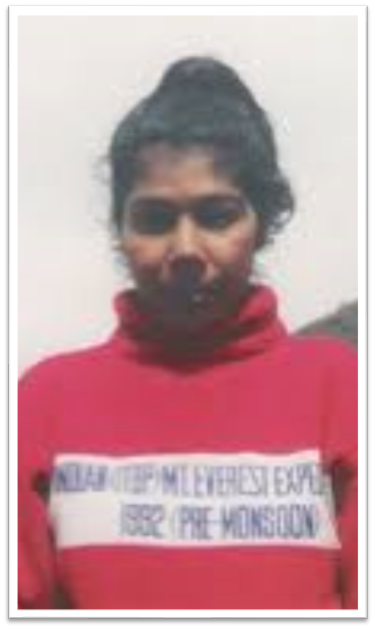 Thereafter, Santosh went on an expedition every year. Her climbing skills matured rapidly. Also, she developed a remarkable resistance to cold and the altitude. Equipped with an iron will, physical endurance and an amazing mental toughness, she proved herself repeatedly. The culmination of her hard work and sincerity came in 1992, just four years after she had shyly asked the Aravalli mountaineers if she could join them. At barely twenty years of age, Santosh Yadav scaled Mt Everest, becoming the youngest woman in the world to achieve the feat. If her climbing skills, physical fitness, and mental strength impressed her seniors, her concern for others and desire to work together with them found her a special place in the hearts of fellow climbers. During the 1992 Everest mission, Santosh Yadav provided special care to a climber who lay dying at the South Col. She was unfortunately unsuccessful in saving him. However, she managed to save another climber, Mohan Singh, who would have met with the same fate had she not shared her oxygen with him.
Matured: developed
Thereafter, Santosh went on an expedition every year. Her climbing skills matured rapidly. Also, she developed a remarkable resistance to cold and the altitude. Equipped with an iron will, physical endurance and an amazing mental toughness, she proved herself repeatedly. The culmination of her hard work and sincerity came in 1992, just four years after she had shyly asked the Aravalli mountaineers if she could join them. At barely twenty years of age, Santosh Yadav scaled Mt Everest, becoming the youngest woman in the world to achieve the feat. If her climbing skills, physical fitness, and mental strength impressed her seniors, her concern for others and desire to work together with them found her a special place in the hearts of fellow climbers. During the 1992 Everest mission, Santosh Yadav provided special care to a climber who lay dying at the South Col. She was unfortunately unsuccessful in saving him. However, she managed to save another climber, Mohan Singh, who would have met with the same fate had she not shared her oxygen with him.
Matured: developed
Resistance: the ability not to be affected by something
Equipped: supplied with
Physical endurance: strength
Culmination: end
Scaled: climbed
Santosh went on an expedition every year and improved her skills gradually. She developed immunity to cold weather and heights. Santosh had the qualities of physical strength, mental strength and strong will power. In 1992, four years after her first casual climb on the Aravalli hills, she climbed Mount Everest. She was twenty years of age. Santosh became the youngest woman in the world to climb the peak. Her seniors were impressed by her qualities of physical strength, mental strength and strong will power. Her companions on expeditions found her to be concerned for others and willing to work as a team. During the 1992 expedition to Everest, she tried to save a fellow climber but was unsuccessful. She was successful in saving another fellow climber - Mohan Singh who fell short of oxygen by sharing her oxygen with him.
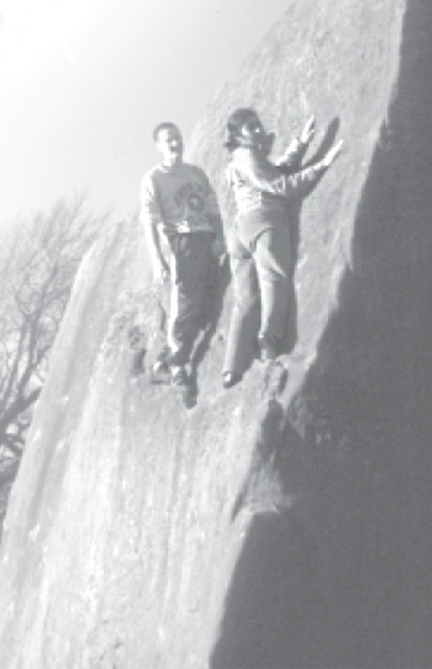 Within twelve months, Santosh found herself a member of an Indo-Nepalese Women’s Expedition that invited her to join them. She then scaled the Everest a second time, thus setting a record as the only woman to have scaled the Everest twice, and securing for herself and India a unique place in the annals of mountaineering. In recognition of her achievements, the Indian government bestowed upon her one of the nation’s top honours, the Padma Shri.
Annals: historic records
Within twelve months, Santosh found herself a member of an Indo-Nepalese Women’s Expedition that invited her to join them. She then scaled the Everest a second time, thus setting a record as the only woman to have scaled the Everest twice, and securing for herself and India a unique place in the annals of mountaineering. In recognition of her achievements, the Indian government bestowed upon her one of the nation’s top honours, the Padma Shri.
Annals: historic records
Bestowed upon her: honoured her with
Top honours: highest award
Within the next year, she had joined a group of Indo - Nepalese mountaineer women. Then she climbed the peak the second time, becoming the only woman to have climbed the Everest twice. Santosh made India proud by getting her name recording in the Historic records of mountaineering. The Indian government honoured her achievement by giving her the Padmashri award.
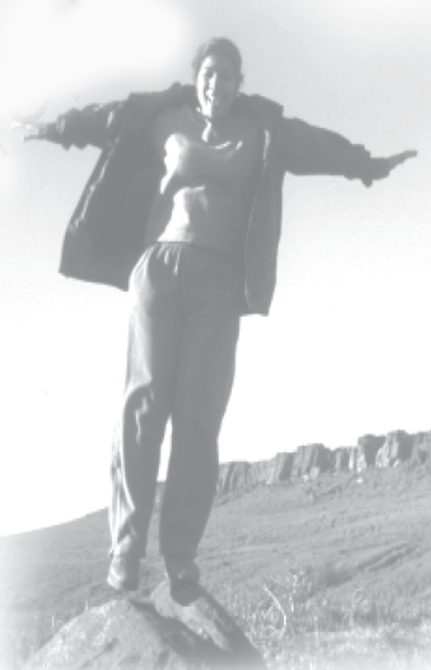
Describing her feelings when she was literally ‘on top of the world’, Santosh has said, “It took some time for the enormity of the moment to sink in... Then I unfurled the Indian tricolour and held it aloft on the roof of the world. The feeling is indescribable. The Indian flag was flying on top of the world. It was truly a spiritual moment. I felt proud as an Indian.” Also a fervent environmentalist, Santosh collected and brought down 500 kilograms of garbage from the Himalayas.
 the enormity of the moment: a very great moment
sink in: be understood
held it aloft: held it up high
fervent: having strong and sincere feelings
Santosh recollects her feelings when she was literally at the top of the world. She took time to realize that she had achieved something big. She hoisted the Indian flag atop Mount Everest, on the highest point of the world. She cannot put the great feeling into words. She felt proud to be an Indian. As she believes in preserving the environment, sher did her bit by bringing down five hundred kilograms of garbage from the Himalayas.
In line with: following or in accordance with, according to
Custom: tradition
Politely: gently
Check it out: find out the truth
Answered in the affirmative: gave a positive reply
Enrolled: took admission into
Headed straight for: went towards
Resistance: the ability not to be affected by something
Equipped: supplied with
Physical endurance: strength
Culmination: end
Scaled: climbed
Bestowed upon her: honoured her with
Top honours: highest award
sink in: be understood
held it aloft: held it up high
fervent: having strong and sincere feelings
Summary
Santosh Yadav was born to wealthy landowners in Joniya was village of Rohtak district in Haryana. She was the youngest child, a sister to five elder brothers. Due to the traditions, she was forced to study in the village school. Since childhood, she was opposed to the customs, preferred wearing shorts in opposition to the traditional dresses like salwar kameez. At the age of sixteen, like other girls in the village, she was forced to get married but she resisted and insisted upon getting educated before getting married. She took admission in a school in Delhi but her parents refused to support her. She accepted it and decided to work part - time to fund her schooling fee. Finally, her parents agreed to support her. Her father accepted her desire to get higher education. After high school, Santosh joined the Maharani college at Jaipur and lived at the Kasturba hostel. There she saw the villagers climb the Aravalli hills and was curious to know what was at the other side of the hills. She joined a group of mountaineers there and hence, undertook her first climbing expedition.
Within four years, in 1992, she climbed Mount Everest. Her qualities of determination, physical and mental strength impressed her seniors. Her fellow climbers appreciated her concern for others and willingness to work in a team. She saved the life of a fellow climber named Mohan Singh by sharing her oxygen cylinder with him. She joined an Indo - Nepalese woman expedition and climbed Everest twice, thus becoming the first woman in the world to climb the peak twice.
Santosh cannot describe the immense feeling of happiness and pride when she was on top of the world. As she hoisted the Indian flag, she felt proud to be an Indian. Being an environmentalist, she brought down five hundred kilograms of garbage from the himalayas.
CBSE Class IX Beehive Lesson 8 - Reach for the Top
Part 2 Maria Sharapova
Introduction to the lesson
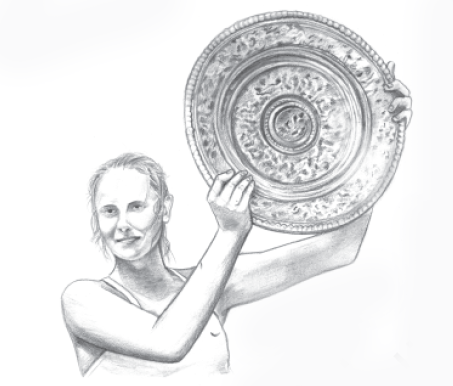
A Russian girl, Maria Sharapova, reached the summit of women’s tennis when she was barely eighteen. As you read about her, see if you can draw a comparison between her and Santosh Yadav.
Maria Sharapova’s story of success as she became the top seeded woman tennis player in the world motivates us. She overcame all the hurdles and bore humiliation too in order to achieve her dream. Maria’s hunger for success and her competitive spirit kept her going.
Explanation
THERE is something disarming about Maria Sharapova, something at odds with her ready smile and glamorous attire. And that something in her lifted her on Monday, 22 August 2005 to the world number one position in women’s tennis. All this happened in almost no time. Poised beyond her years, the Siberian born teenager took just four years as a professional to reach the pinnacle.
Disarming: likeable
At odds with: in conflict with
Poised: calm, elegant
Pinnacle: the most successful point
There is some quality in contrast to Maria Sharapova’s smile and glamour, which makes her likeable. It is this quality that helped her achieve success as she attained world number one position in women’s tennis on Monday, 22 August 2005. Maria’s calmness and elegance is beyond her age. She was born in Siberia, Russia and as a teenager, she took only four years of training to become the top seeded woman tennis player.
However, the rapid ascent in a fiercely competitive world began nine years before with a level of sacrifice few children would be prepared to endure. Little Maria had not yet celebrated her tenth birthday when she was packed off to train in the United States. That trip to Florida with her father Yuri launched her on the path to success and stardom. But it also required a heart-wrenching two-year separation from her mother Yelena. The latter was compelled to stay back in Siberia because of visa restrictions. The nine-year-old girl had already learnt an important lesson in life — that tennis excellence would only come at a price.
Rapid: fast
Ascent: growth
Endure: suffer patiently
Heart - wrenching: extremely sad
The fast growth of her career started nine years ago when she made a big sacrifice which can be made by very few children of that young age. She had not even turned ten when she was sent to Florida, USA with her father for training in tennis. She was extremely sad as she had to spend two years’ separation from her mother Yelena. Maria’s mother was forced to stay back in Siberia because she did not have the permit to travel to the US. At the tender age of nine, Maria learned that in order to excel at tennis, she would have to make many sacrifices.
“I used to be so lonely,” Maria Sharapova recalls. “I missed my mother terribly. My father was working as much as he could to keep my tennis-training going. So, he couldn’t see me either.
Maria recollects that she used to remain alone and missed her mother a lot. Her father worked hard to fetch money for her needs and so, he also could not meet her.
“Because I was so young, I used to go to bed at 8 p.m. The other tennis pupils would come in at 11 p.m. and wake me up and order me to tidy up the room and clean it.
Maria was very young and so, she would go to sleep at 8 pm. The other students would return at 11 and would wake her up, ordering her to clean the room.
“Instead of letting that depress me, I became more quietly determined and mentally tough. I learnt how to take care of myself. I never thought of quitting because I knew what I wanted. When you come from nothing and you have nothing, then it makes you very hungry and determined . .. I would have put up with much more humiliation and insults than that to steadfastly pursue my dream.”
Depress: sadden
Quitting: leaving
Pursue: follow
Maria did not get depressed by all this. Instead she became determined and mentally tough. She took care of herself. She never thought of leaving the training because she was determined to achieve her aim. When a person has nothing, he craves and becomes determined to get it. She says that she would have borne greater humiliation and insults also in order to achieve her dream.
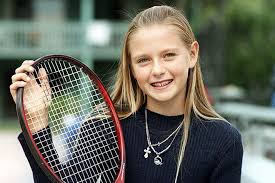
That toughness runs through Maria even today. It was the key to her bagging the women’s singles crown at Wimbledon in 2004 and to her meteoric rise to the world number one spot the following year.
Bagging: winning
Meteoric: very rapid
Maria retains her determination till present day. This determination led her to grab the women’s singles trophy at the Wimbledon Championship in 2004, followed by the rapid climb to the top position in 2005.
While her journey from the frozen plains of Siberia to the summit of women’s tennis has touched the hearts of tennis fans, for the youngster herself there appears to be no room for sentiment. The straight looks and the answers she gives when asked about her ambition make it amply clear that she considers the sacrifices were worth it. “I am very, very competitive. I work hard at what I do. It’s my job.” This is her mantra for success.
Sentiment: emotional feeling
Ambition: goal, aim
Amply: plentifully
Tennis fans feel emotional to know about Maria’s journey from the frozen region of Siberia but she is not moved by it. She gives straight answers when questioned about her aims which imply that she accepts that the hurdles and challenges she faced were worth the result that she got. She adds that she is competitive and works hard as she considers it to be a part of her work. This is Maria’s secret for success.
Though Maria Sharapova speaks with a pronounced American accent, she proudly parades her Russian nationality. Clearing all doubts, she says, “I’m Russian. It’s true that the U.S. is a big part of my life. But I have Russian citizenship. My blood is totally Russian. I will play the Olympics for Russia if they want me.”
Parades: displays
Maria’s speech has an American accent but she is proud to be a Russian. She says that USA is a big part of her life because she trained there but in the core of her heart, she is a Russian. She holds the citizenship of Russia, her ancestors are Russians and she is willing to represent Russia at the Olympics too.
Like any number of teenaged sensations, Maria Sharapova lists fashion, singing and dancing as her hobbies. She loves reading the novels of Arthur Conan Doyle. Her fondness for sophisticated evening gowns appears at odds with her love of pancakes with chocolate spread and fizzy orange drinks.
Sophisticated: fashionable
At odds with: in disagreement with
Fizzy: aerated
Like other teenagers her age, Maria’s favourite pastimes are fashion, singing and dancing. She likes to read novels written by Arthur Conan Doyle, the creator of Sherlock Holmes. She likes to wear fashionable evening gowns. Looking at her fit body, it is unbelievable that she likes to eat pancakes with chocolate spread and drinks aerated orange flavoured drinks.

Maria Sharapova cannot be pigeon-holed or categorised. Her talent, unwavering desire to succeed and readiness to sacrifice have lifted her to the top of the world. Few would grudge her the riches she is now reaping. This is what she has to say about her monetary gains from tennis: “Of course, money is a motivation. Tennis is a business and a sport, but the most important thing is to become number one in the world. That’s the dream that kept me going.”
Pigeon-holed: classified, categorized
Unwavering: steady, firm
Grudge: oppose, mind
Maria cannot be put into a particular category. Her talent, urge to succeed and sacrificing nature helped her reach the top position in women’s tennis. No one will oppose the benefits that she is getting now because she made many sacrifices to get them. She says that money does motivate her to work hard. Tennis is both a sport and a business but the most important aspect for her was to reach the top spot in women’s tennis. It was this dream that kept her working further.
Summary
This write up about Maria Sharapova inspires us to remain determined and make sacrifices in order to fulfil our dreams. On 22 August 2005, Maria became the top seeded player in the world women’s tennis player rankings. She made great sacrifices to achieve her goal.
At the tender age of nine, she left her home in Siberia, Russia to get training in tennis. She went to Florida in USA with her father. Maria suffered a painful separation from her mother for a period of two years. She could not see her father too as he remained busy working, arranging funds for all her needs. She was bullied by her seniors and being a foreigner, she had to suffer all that patiently. Maria did not feel depressed, rather she was prepared for greater insults too in order to achieve her aim.
Her mantra for success is to work hard and face the toughest competition. Although she was trained in the US, she considers herself to be a Russian and is wiling to represent Russia at the Olympics too. Her favourite hobbies are fashion, singing and dancing. She loves reading novels written by Arthur Conan Doyle. Her love for fashionable evening gowns is in contrast to her liking for pancakes with chocolate spread and orange flavoured aerated drinks. The monetary gains and the fame incurred by Maria are well deserved.
Reach for the Top / Text and Video

1. What difference does the author note between the flute seller and the other hawkers?
A. The author noticed that the flute seller was calm and quiet. He did not scream to sell his wares like other hawkers did.
2. What is the belief at Pashupatinath about the end of Kaliyug?
A. The belief at the Pashupatinath temple about the end of Kaliyug is that when the small shrine will protrude completely, then the goddess will emerge out of it. The goddess will bring an end to the evil period of Kaliyug.
3. The author has drawn powerful images and pictures. Pick out three examples each of
(i) the atmosphere of ‘febrile confusion’ outside the temple of Pashupatinath (for example: some people trying to get the priest’s attention are elbowed aside...)
(ii) the things he sees
(iii) the sounds he hears
A. (i) the atmosphere of ‘febrile confusion’ outside the temple of Pashupatinath (for example: some people trying to get the priest’s attention are elbowed aside...)
a) There are so many worshippers that some people trying to get the priest’s attention are elbowed aside by others
b) By the main gate, a party of saffron-clad Westerners struggle for permission to enter.
c) A fight breaks out between two monkeys.
(ii) the things he sees
a) fruit sellers
b) flute sellers
c) hawkers of postcards
(iii) the sounds he hears
a) Film songs blare out from the radios
b) car horns sound
c) vendors shout out their wares.
Answer the following questions in not more than 100–150 words each.
1. Compare and contrast the atmosphere in and around the Baudhnath shrine with the Pashupatinath temple.
A. The atmosphere at the Baudhnath temple is calm and quiet. The temple has a huge white dome with an outer ring road. The place is relaxing as there are no noises or crowds around.
On the contrary, the atmosphere at the Pashupatinath temple is chaotic. There is a lot of confusion and noise as tourists, pilgrims, priests and animals roam around. As entry is restricted to Hindus only, foreigners dressed as sadhus can be seen arguing with the guards to gain entry. A rush of people can be seen elbowing each other to gain entry. One can see monkeys fighting and climbing on the shivling in the temple. There is a lot of activity going on near the holy river Bagmati that flows near the temple.
2. How does the author describe Kathmandu’s busiest streets?
A. Kathmandu’s busiest streets are lined with shops and stalls selling different things. There are small temples having deities adorned with flowers. The vendors scream to attract buyers. There are shops selling various things, namely, chocolates, camera film rolls, imported cosmetics, postcards, utensils and antiques. There are hawkers selling fruits, flutes, postcards for the tourists.
3. “To hear any flute is to be drawn into the commonality of all mankind.” Why does the author say this?
A. The author says this because the sound produced by the flute is the closest to human voice. It is an extension of human voice as it is produced by exhaling into it.