CBSE Class IX Beehive Lesson 8 - Reach for the Top
Part 1 Santosh Yadav

Introduction
The article is about Santosh Yadav, the first woman in the world to climb Mount Everest twice. Her story is inspiring. Despite being born in a skewed society which did not welcome the birth of a girl child, where girls were married off at sixteen, she made her own path, followed her desires and achieved world fame.
Lesson and explanation
The only woman in the world who has scaled Mt Everest twice was born in a society where the birth of a son was regarded as a blessing, and a daughter, though not considered a curse, was not generally welcome. When her mother was expecting Santosh, a travelling ‘holy man’, giving her his blessing, assumed that she wanted a son. But, to everyone’s surprise, the unborn child’s grandmother, who was standing close by, told him that they did not want a son. The ‘holy man’ was also surprised! Nevertheless, he gave the requested blessing . . . and as destiny would have it, the blessing seemed to work. Santosh was born the sixth child in a family with five sons, a sister to five brothers. She was born in the small village of Joniya was of Rewari District in Haryana.
When this article was written, Santosh Yadav was the only woman in the world to have climbed the Mount Everest twice. She was born in such a society which was biased towards having a male child over a female child. Although they did not consider the birth of a girl child to be unfortunate, but it was not celebrated either. When Santosh was to be born, a saint, assuming that Santosh’s mother wanted a son, blessed her that she would beget a son. As she already had five sons, Santosh’s grandmother said to the saint that they did not want a son. The saint was amazed to hear this and blessed her alternatively. The blessing turned into a reality as Santosh was born. She was the youngest child, a sister to five brothers. Santosh was born in a village named Joniyawas in Rewari district of Haryana.
The girl was given the name ‘Santosh’, which means contentment. But Santosh was not always content with her place in a traditional way of life. She began living life on her own terms from the start. Where other girls wore traditional Indian dresses, Santosh preferred shorts. Looking back, she says now, “From the very beginning I was quite determined that if I chose a correct and a rational path, the others around me had to change, not me.”
Contentment: satisfaction
Although Santosh’s name means contentment, she was dissatisfied with the traditional way of life. From a young age, she started living life on her own terms. While other girls wore traditional Indian dresses like salwar kameez, she preferred wearing shorts. Santosh recollects that from childhood, she was determined to live life according to what she felt was right for her. If she was right in her way, then others would have to change their way and not her.
Santosh’s parents were affluent landowners who could afford to send their children to the best schools, even to the country’s capital, New Delhi, which was quite close by. But, in line with the prevailing custom in the family, Santosh had to make do with the local village school. So, she decided to fight the system in her own quiet way when the right moment arrived. And the right moment came when she turned sixteen. At sixteen, most of the girls in her village used to get married. Santosh was also under pressure from her parents to do the same.
Affluent: well - to - do
In line with: following or in accordance with, according to
Custom: tradition
Santosh’s parents owned land and were wealthy. They could even afford the money to send their children to study in schools in Delhi which was near their village. Still, due to the prevailing customs, they decided to send Santosh to a school in the village. Santosh decided that she had to take her own path when the right time cam. At the age of sixteen, as most of the girls in her village were married off, she was also pressurised by her parents.
A marriage as early as that was the last thing on her mind. She threatened her parents that she would never marry if she did not get a proper education. She left home and got herself enrolled in a school in Delhi. When her parents refused to pay for her education, she politely informed them of her plans to earn money by working part time to pay her school fees. Her parents then agreed to pay for her education.
the last thing: the least important thing
Politely: gently
For her, getting married was nowhere in the list. She wanted to get proper education before getting married. Santosh left home and got admission in a school in Delhi. Her parents refused to fund her studies and she gently replied that she would herself fund her studies by working part - time. Upon seeing her determination, the parents softened their stand and agreed to pay for her education.
Wishing always to study “a bit more” and with her father slowly getting used to her urge for more education, Santosh passed the high school examinations and went to Jaipur. She joined Maharani College and got a room in Kasturba Hostel. Santosh remembers, “Kasturba Hostel faced the Aravalli Hills. I used to watch villagers from my room, going up the hill and suddenly vanishing after a while. One day I decided to check it out myself. I found nobody except a few mountaineers. I asked if I could join them. To my pleasant surprise, they answered in the affirmative and motivated me to take to climbing.”
Urge: strong desire
Check it out: find out the truth
Answered in the affirmative: gave a positive reply
Santosh wanted to be highly qualified and her father accepted her wish. After passing high school, she joined to Maharani college at Jaipur and stayed at the Kasturba hostel. The Aravalli hills were near the hostel. Often she saw villagers climbing the hills and disappearing behind it. She was curious to know what was beyond the hills and one day, she decided to find out. Santosh found a few mountaineers who allowed her to join them in their mountaineering expedition.
Then there was no looking back for this determined young girl. She saved money and enrolled in a course at Uttarkashi’s Nehru Institute of Mountaineering. “My college semester in Jaipur was to end in April but it ended on the nineteenth of May. And I was supposed to be in Uttarkashi on the twenty-first. So, I did not go back home; instead, I headed straight for the training. I had to write a letter of apology to my father without whose permission I had got myself enrolled at Uttarkashi.”
No looking back: to progress without interruption or impediment
Enrolled: took admission into
Headed straight for: went towards
Since then, Santosh progressed gradually to become an accomplished mountaineer. She saved money to get enrolled in a mountaineering course at the Nehru Institute of Mountaineering at Uttarkashi. As her college semester’s end got delayed and she did not have time to visit home before reporting at the Nehru Institute of Mountaineering, she went directly to the institute and wrote a letter of apology to her father because she had enrolled for the course without his permission.
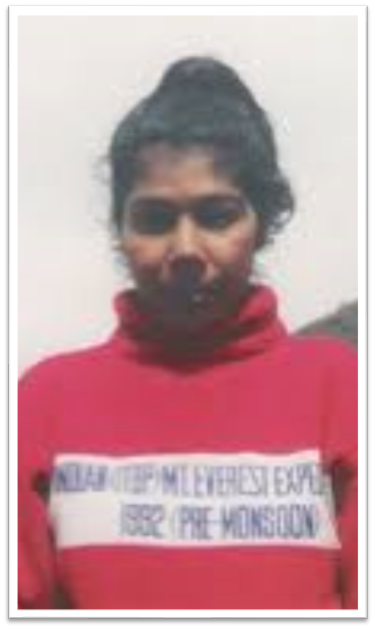 Thereafter, Santosh went on an expedition every year. Her climbing skills matured rapidly. Also, she developed a remarkable resistance to cold and the altitude. Equipped with an iron will, physical endurance and an amazing mental toughness, she proved herself repeatedly. The culmination of her hard work and sincerity came in 1992, just four years after she had shyly asked the Aravalli mountaineers if she could join them. At barely twenty years of age, Santosh Yadav scaled Mt Everest, becoming the youngest woman in the world to achieve the feat. If her climbing skills, physical fitness, and mental strength impressed her seniors, her concern for others and desire to work together with them found her a special place in the hearts of fellow climbers. During the 1992 Everest mission, Santosh Yadav provided special care to a climber who lay dying at the South Col. She was unfortunately unsuccessful in saving him. However, she managed to save another climber, Mohan Singh, who would have met with the same fate had she not shared her oxygen with him.
Matured: developed
Thereafter, Santosh went on an expedition every year. Her climbing skills matured rapidly. Also, she developed a remarkable resistance to cold and the altitude. Equipped with an iron will, physical endurance and an amazing mental toughness, she proved herself repeatedly. The culmination of her hard work and sincerity came in 1992, just four years after she had shyly asked the Aravalli mountaineers if she could join them. At barely twenty years of age, Santosh Yadav scaled Mt Everest, becoming the youngest woman in the world to achieve the feat. If her climbing skills, physical fitness, and mental strength impressed her seniors, her concern for others and desire to work together with them found her a special place in the hearts of fellow climbers. During the 1992 Everest mission, Santosh Yadav provided special care to a climber who lay dying at the South Col. She was unfortunately unsuccessful in saving him. However, she managed to save another climber, Mohan Singh, who would have met with the same fate had she not shared her oxygen with him.
Matured: developed
Resistance: the ability not to be affected by something
Equipped: supplied with
Physical endurance: strength
Culmination: end
Scaled: climbed
Santosh went on an expedition every year and improved her skills gradually. She developed immunity to cold weather and heights. Santosh had the qualities of physical strength, mental strength and strong will power. In 1992, four years after her first casual climb on the Aravalli hills, she climbed Mount Everest. She was twenty years of age. Santosh became the youngest woman in the world to climb the peak. Her seniors were impressed by her qualities of physical strength, mental strength and strong will power. Her companions on expeditions found her to be concerned for others and willing to work as a team. During the 1992 expedition to Everest, she tried to save a fellow climber but was unsuccessful. She was successful in saving another fellow climber - Mohan Singh who fell short of oxygen by sharing her oxygen with him.
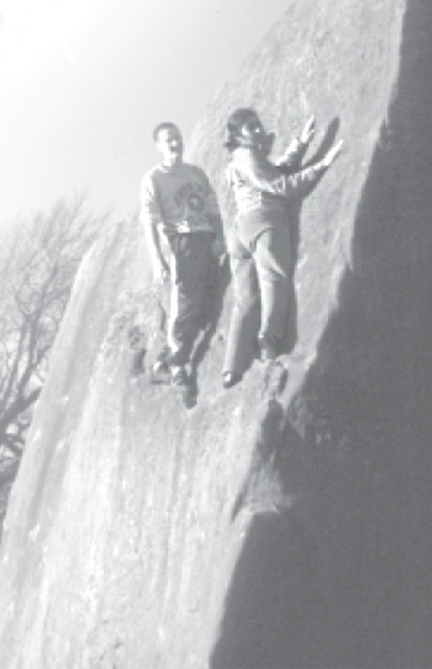 Within twelve months, Santosh found herself a member of an Indo-Nepalese Women’s Expedition that invited her to join them. She then scaled the Everest a second time, thus setting a record as the only woman to have scaled the Everest twice, and securing for herself and India a unique place in the annals of mountaineering. In recognition of her achievements, the Indian government bestowed upon her one of the nation’s top honours, the Padma Shri.
Annals: historic records
Within twelve months, Santosh found herself a member of an Indo-Nepalese Women’s Expedition that invited her to join them. She then scaled the Everest a second time, thus setting a record as the only woman to have scaled the Everest twice, and securing for herself and India a unique place in the annals of mountaineering. In recognition of her achievements, the Indian government bestowed upon her one of the nation’s top honours, the Padma Shri.
Annals: historic records
Bestowed upon her: honoured her with
Top honours: highest award
Within the next year, she had joined a group of Indo - Nepalese mountaineer women. Then she climbed the peak the second time, becoming the only woman to have climbed the Everest twice. Santosh made India proud by getting her name recording in the Historic records of mountaineering. The Indian government honoured her achievement by giving her the Padmashri award.
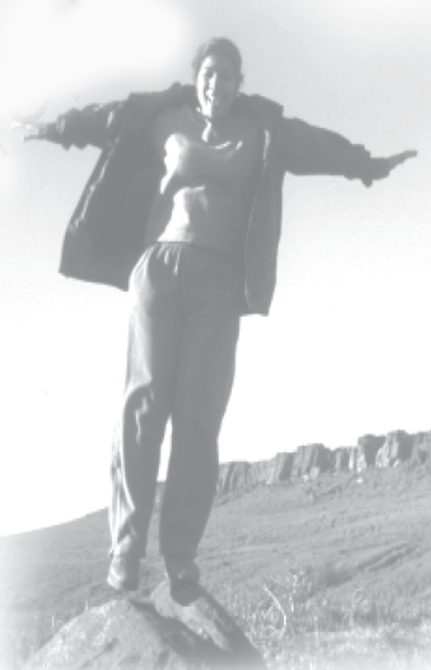
Describing her feelings when she was literally ‘on top of the world’, Santosh has said, “It took some time for the enormity of the moment to sink in... Then I unfurled the Indian tricolour and held it aloft on the roof of the world. The feeling is indescribable. The Indian flag was flying on top of the world. It was truly a spiritual moment. I felt proud as an Indian.” Also a fervent environmentalist, Santosh collected and brought down 500 kilograms of garbage from the Himalayas.
 the enormity of the moment: a very great moment
sink in: be understood
held it aloft: held it up high
fervent: having strong and sincere feelings
Santosh recollects her feelings when she was literally at the top of the world. She took time to realize that she had achieved something big. She hoisted the Indian flag atop Mount Everest, on the highest point of the world. She cannot put the great feeling into words. She felt proud to be an Indian. As she believes in preserving the environment, sher did her bit by bringing down five hundred kilograms of garbage from the Himalayas.
In line with: following or in accordance with, according to
Custom: tradition
Politely: gently
Check it out: find out the truth
Answered in the affirmative: gave a positive reply
Enrolled: took admission into
Headed straight for: went towards
Resistance: the ability not to be affected by something
Equipped: supplied with
Physical endurance: strength
Culmination: end
Scaled: climbed
Bestowed upon her: honoured her with
Top honours: highest award
sink in: be understood
held it aloft: held it up high
fervent: having strong and sincere feelings
Summary
Santosh Yadav was born to wealthy landowners in Joniya was village of Rohtak district in Haryana. She was the youngest child, a sister to five elder brothers. Due to the traditions, she was forced to study in the village school. Since childhood, she was opposed to the customs, preferred wearing shorts in opposition to the traditional dresses like salwar kameez. At the age of sixteen, like other girls in the village, she was forced to get married but she resisted and insisted upon getting educated before getting married. She took admission in a school in Delhi but her parents refused to support her. She accepted it and decided to work part - time to fund her schooling fee. Finally, her parents agreed to support her. Her father accepted her desire to get higher education. After high school, Santosh joined the Maharani college at Jaipur and lived at the Kasturba hostel. There she saw the villagers climb the Aravalli hills and was curious to know what was at the other side of the hills. She joined a group of mountaineers there and hence, undertook her first climbing expedition.
Within four years, in 1992, she climbed Mount Everest. Her qualities of determination, physical and mental strength impressed her seniors. Her fellow climbers appreciated her concern for others and willingness to work in a team. She saved the life of a fellow climber named Mohan Singh by sharing her oxygen cylinder with him. She joined an Indo - Nepalese woman expedition and climbed Everest twice, thus becoming the first woman in the world to climb the peak twice.
Santosh cannot describe the immense feeling of happiness and pride when she was on top of the world. As she hoisted the Indian flag, she felt proud to be an Indian. Being an environmentalist, she brought down five hundred kilograms of garbage from the himalayas.
CBSE Class IX Beehive Lesson 8 - Reach for the Top
Part 2 Maria Sharapova
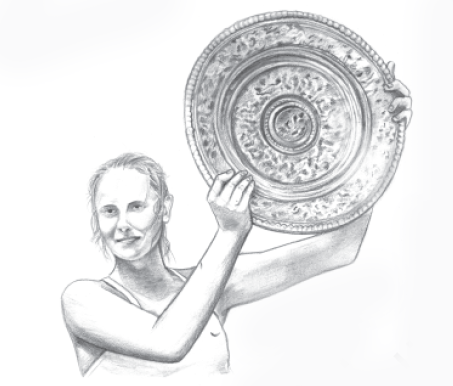
Introduction to the lesson
A Russian girl, Maria Sharapova, reached the summit of women’s tennis when she was barely eighteen. As you read about her, see if you can draw a comparison between her and Santosh Yadav.
Maria Sharapova’s story of success as she became the top seeded woman tennis player in the world motivates us. She overcame all the hurdles and bore humiliation too in order to achieve her dream. Maria’s hunger for success and her competitive spirit kept her going.
Explanation
THERE is something disarming about Maria Sharapova, something at odds with her ready smile and glamorous attire. And that something in her lifted her on Monday, 22 August 2005 to the world number one position in women’s tennis. All this happened in almost no time. Poised beyond her years, the Siberian born teenager took just four years as a professional to reach the pinnacle.
Disarming: likeable
At odds with: in conflict with
Poised: calm, elegant
Pinnacle: the most successful point
There is some quality in contrast to Maria Sharapova’s smile and glamour, which makes her likeable. It is this quality that helped her achieve success as she attained world number one position in women’s tennis on Monday, 22 August 2005. Maria’s calmness and elegance is beyond her age. She was born in Siberia, Russia and as a teenager, she took only four years of training to become the top seeded woman tennis player.
However, the rapid ascent in a fiercely competitive world began nine years before with a level of sacrifice few children would be prepared to endure. Little Maria had not yet celebrated her tenth birthday when she was packed off to train in the United States. That trip to Florida with her father Yuri launched her on the path to success and stardom. But it also required a heart-wrenching two-year separation from her mother Yelena. The latter was compelled to stay back in Siberia because of visa restrictions. The nine-year-old girl had already learnt an important lesson in life — that tennis excellence would only come at a price.
Rapid: fast
Ascent: growth
Endure: suffer patiently
Heart - wrenching: extremely sad
The fast growth of her career started nine years ago when she made a big sacrifice which can be made by very few children of that young age. She had not even turned ten when she was sent to Florida, USA with her father for training in tennis. She was extremely sad as she had to spend two years’ separation from her mother Yelena. Maria’s mother was forced to stay back in Siberia because she did not have the permit to travel to the US. At the tender age of nine, Maria learned that in order to excel at tennis, she would have to make many sacrifices.
“I used to be so lonely,” Maria Sharapova recalls. “I missed my mother terribly. My father was working as much as he could to keep my tennis-training going. So, he couldn’t see me either.
Maria recollects that she used to remain alone and missed her mother a lot. Her father worked hard to fetch money for her needs and so, he also could not meet her.
“Because I was so young, I used to go to bed at 8 p.m. The other tennis pupils would come in at 11 p.m. and wake me up and order me to tidy up the room and clean it.
Maria was very young and so, she would go to sleep at 8 pm. The other students would return at 11 and would wake her up, ordering her to clean the room.
“Instead of letting that depress me, I became more quietly determined and mentally tough. I learnt how to take care of myself. I never thought of quitting because I knew what I wanted. When you come from nothing and you have nothing, then it makes you very hungry and determined . .. I would have put up with much more humiliation and insults than that to steadfastly pursue my dream.”
Depress: sadden
Quitting: leaving
Pursue: follow
Maria did not get depressed by all this. Instead she became determined and mentally tough. She took care of herself. She never thought of leaving the training because she was determined to achieve her aim. When a person has nothing, he craves and becomes determined to get it. She says that she would have borne greater humiliation and insults also in order to achieve her dream.
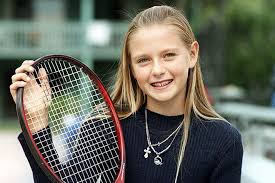
That toughness runs through Maria even today. It was the key to her bagging the women’s singles crown at Wimbledon in 2004 and to her meteoric rise to the world number one spot the following year.
Bagging: winning
Meteoric: very rapid
Maria retains her determination till present day. This determination led her to grab the women’s singles trophy at the Wimbledon Championship in 2004, followed by the rapid climb to the top position in 2005.
While her journey from the frozen plains of Siberia to the summit of women’s tennis has touched the hearts of tennis fans, for the youngster herself there appears to be no room for sentiment. The straight looks and the answers she gives when asked about her ambition make it amply clear that she considers the sacrifices were worth it. “I am very, very competitive. I work hard at what I do. It’s my job.” This is her mantra for success.
Sentiment: emotional feeling
Ambition: goal, aim
Amply: plentifully
Tennis fans feel emotional to know about Maria’s journey from the frozen region of Siberia but she is not moved by it. She gives straight answers when questioned about her aims which imply that she accepts that the hurdles and challenges she faced were worth the result that she got. She adds that she is competitive and works hard as she considers it to be a part of her work. This is Maria’s secret for success.
Though Maria Sharapova speaks with a pronounced American accent, she proudly parades her Russian nationality. Clearing all doubts, she says, “I’m Russian. It’s true that the U.S. is a big part of my life. But I have Russian citizenship. My blood is totally Russian. I will play the Olympics for Russia if they want me.”
Parades: displays
Maria’s speech has an American accent but she is proud to be a Russian. She says that USA is a big part of her life because she trained there but in the core of her heart, she is a Russian. She holds the citizenship of Russia, her ancestors are Russians and she is willing to represent Russia at the Olympics too.
Like any number of teenaged sensations, Maria Sharapova lists fashion, singing and dancing as her hobbies. She loves reading the novels of Arthur Conan Doyle. Her fondness for sophisticated evening gowns appears at odds with her love of pancakes with chocolate spread and fizzy orange drinks.
Sophisticated: fashionable
At odds with: in disagreement with
Fizzy: aerated
Like other teenagers her age, Maria’s favourite pastimes are fashion, singing and dancing. She likes to read novels written by Arthur Conan Doyle, the creator of Sherlock Holmes. She likes to wear fashionable evening gowns. Looking at her fit body, it is unbelievable that she likes to eat pancakes with chocolate spread and drinks aerated orange flavoured drinks.

Maria Sharapova cannot be pigeon-holed or categorised. Her talent, unwavering desire to succeed and readiness to sacrifice have lifted her to the top of the world. Few would grudge her the riches she is now reaping. This is what she has to say about her monetary gains from tennis: “Of course, money is a motivation. Tennis is a business and a sport, but the most important thing is to become number one in the world. That’s the dream that kept me going.”
Pigeon-holed: classified, categorized
Unwavering: steady, firm
Grudge: oppose, mind
Maria cannot be put into a particular category. Her talent, urge to succeed and sacrificing nature helped her reach the top position in women’s tennis. No one will oppose the benefits that she is getting now because she made many sacrifices to get them. She says that money does motivate her to work hard. Tennis is both a sport and a business but the most important aspect for her was to reach the top spot in women’s tennis. It was this dream that kept her working further.
Summary
This write up about Maria Sharapova inspires us to remain determined and make sacrifices in order to fulfil our dreams. On 22 August 2005, Maria became the top seeded player in the world women’s tennis player rankings. She made great sacrifices to achieve her goal.
At the tender age of nine, she left her home in Siberia, Russia to get training in tennis. She went to Florida in USA with her father. Maria suffered a painful separation from her mother for a period of two years. She could not see her father too as he remained busy working, arranging funds for all her needs. She was bullied by her seniors and being a foreigner, she had to suffer all that patiently. Maria did not feel depressed, rather she was prepared for greater insults too in order to achieve her aim.
Her mantra for success is to work hard and face the toughest competition. Although she was trained in the US, she considers herself to be a Russian and is wiling to represent Russia at the Olympics too. Her favourite hobbies are fashion, singing and dancing. She loves reading novels written by Arthur Conan Doyle. Her love for fashionable evening gowns is in contrast to her liking for pancakes with chocolate spread and orange flavoured aerated drinks. The monetary gains and the fame incurred by Maria are well deserved.
Reach for the Top / Text and Video

1. What difference does the author note between the flute seller and the other hawkers?
A. The author noticed that the flute seller was calm and quiet. He did not scream to sell his wares like other hawkers did.
2. What is the belief at Pashupatinath about the end of Kaliyug?
A. The belief at the Pashupatinath temple about the end of Kaliyug is that when the small shrine will protrude completely, then the goddess will emerge out of it. The goddess will bring an end to the evil period of Kaliyug.
3. The author has drawn powerful images and pictures. Pick out three examples each of
(i) the atmosphere of ‘febrile confusion’ outside the temple of Pashupatinath (for example: some people trying to get the priest’s attention are elbowed aside...)
(ii) the things he sees
(iii) the sounds he hears
A. (i) the atmosphere of ‘febrile confusion’ outside the temple of Pashupatinath (for example: some people trying to get the priest’s attention are elbowed aside...)
a) There are so many worshippers that some people trying to get the priest’s attention are elbowed aside by others
b) By the main gate, a party of saffron-clad Westerners struggle for permission to enter.
c) A fight breaks out between two monkeys.
(ii) the things he sees
a) fruit sellers
b) flute sellers
c) hawkers of postcards
(iii) the sounds he hears
a) Film songs blare out from the radios
b) car horns sound
c) vendors shout out their wares.
Answer the following questions in not more than 100–150 words each.
1. Compare and contrast the atmosphere in and around the Baudhnath shrine with the Pashupatinath temple.
A. The atmosphere at the Baudhnath temple is calm and quiet. The temple has a huge white dome with an outer ring road. The place is relaxing as there are no noises or crowds around.
On the contrary, the atmosphere at the Pashupatinath temple is chaotic. There is a lot of confusion and noise as tourists, pilgrims, priests and animals roam around. As entry is restricted to Hindus only, foreigners dressed as sadhus can be seen arguing with the guards to gain entry. A rush of people can be seen elbowing each other to gain entry. One can see monkeys fighting and climbing on the shivling in the temple. There is a lot of activity going on near the holy river Bagmati that flows near the temple.
2. How does the author describe Kathmandu’s busiest streets?
A. Kathmandu’s busiest streets are lined with shops and stalls selling different things. There are small temples having deities adorned with flowers. The vendors scream to attract buyers. There are shops selling various things, namely, chocolates, camera film rolls, imported cosmetics, postcards, utensils and antiques. There are hawkers selling fruits, flutes, postcards for the tourists.
3. “To hear any flute is to be drawn into the commonality of all mankind.” Why does the author say this?
A. The author says this because the sound produced by the flute is the closest to human voice. It is an extension of human voice as it is produced by exhaling into it.
Kathmandu, Vikram Seth, Ncert Solution
Introduction
The writer Vikram Seth came from China to India hitchhiking via tibet and Nepal and wrote about it in his book titled ‘Heaven Lake’. In this excerpt from the book, we get to know about his visit to Kathmandu, the capital of Nepal.
Lesson and Explanation
I GET a cheap room in the centre of town and sleep for hours. The next morning, with Mr Shah’s son and nephew, I visit the two temples in Kathmandu that are most sacred to Hindus and Buddhists.
Vikram took a cheap, affordable hotel room on rent and as he was tired from the journey, he slept for a few hours. The next morning he visited two temples in Kathmandu along with Mr.Shah’s son and nephew. One of the temples was a pilgrimage for Hindus and the other one of the Buddhists.
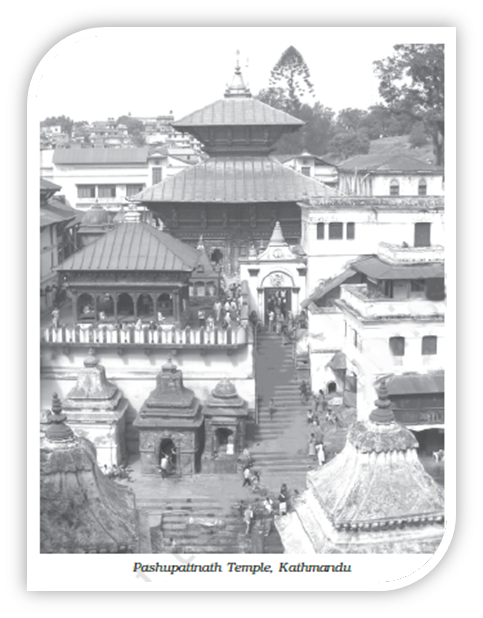
At Pashupatinath (outside which a sign proclaims ‘Entrance for the Hindus only’) there is an atmosphere of ‘febrile confusion’. Priests, hawkers, devotees, tourists, cows, monkeys, pigeons and dogs roam through the grounds. We offer a few flowers. There are so many worshippers that some people trying to get the priest’s attention are elbowed aside by others pushing their way to the front. A princess of the Nepalese royal house appears; everyone bows and makes way. By the main gate, a party of saffron-clad Westerners struggle for permission to enter. The policeman is not convinced that they are ‘the Hindus’ (only Hindus are allowed to enter the temple). A fight breaks out between two monkeys. One chases the other, who jumps onto a shivalinga, then runs screaming around the temples and down to the river, the holy Bagmati, that flows below. A corpse is being cremated on its banks; washerwomen are at their work and children bathe. From a balcony a basket of flowers and leaves, old offerings now wilted, is dropped into the river. A small shrine half protrudes from the stone platform on the river bank. When it emerges fully, the goddess inside will escape, and the evil period of the Kaliyuga will end on earth.
Proclaims: make known publicly or officially
Febrile confusion: hurried activity; complete chaos
Saffron - clad westerners: foreigners dressed as sadhus
Corpse: dead body
Wilted: dry and withered
Shrine: a place of worship
Protrudes: comes out
Kalyug: it is the fourth and last stages or time period of a Mahayuga. It started with the end of Mahabharata when Lord Krishna left the Earth.
Outside the Pashupatinath temple, a board was hung which read that entry into the temple was restricted to Hindus only. There was chaos outside the temple as priests, hawkers, devotees, tourists and various animals moved around. They writer and his friends offered a few flowers in the temple. There was a huge rush of pilgrims and they were elbowing each other in order to move ahead and reach the priest. As a royal princess appeared, everyone got aside to give way and bowed to her. At the main entrance, a group of foreigners who were dressed up in saffron colour clothes like sadhus were trying to gain entry into the temple. The guard denied entry as he knew that they were not hindus. Then he saw two monkeys fighting and one chased the other who jumped onto a shivling, then ran around the temple and finally, reached the banks of the holy Bagmati river which flows next to the temple. There he saw a dead body being cremated, washerwomen washing clothes and children bathing in the river. The writer noticed how the river was being polluted when a basket of dry withered flowers was thrown into it from the balcony of a building. A small temple protruded from the platform on the river bank. It is said that when the temple would emerge out completely, then the goddess in it would come out and the time period of the Kalyug would thus be ended by her.
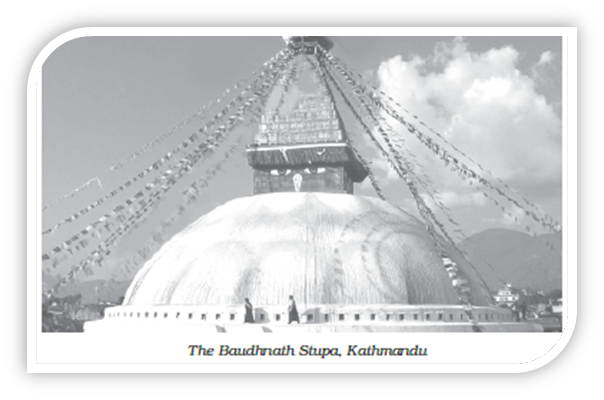
At the Boudhnath stupa, the Buddhist shrine of Kathmandu, there is, in contrast, a sense of stillness. Its immense white dome is ringed by a road. Small shops stand on its outer edge: many of these are owned by Tibetan immigrants; felt bags, Tibetan prints and silver jewellery can be bought here. There are no crowds: this is a haven of quietness in the busy streets around.
Immigrants: a person who comes to live permanently in a foreign country.
Haven: a safe place
Then the writer describes the Boudhanath temple which is a holy place for Buddhists. The place had a feel of calmness. There was a huge white - coloured dome circumscribed by a road. There was a Tibetan market on the edge of the road where immigrants from Tibet had out up shops selling felt bags, printed dresses and silver jewellery. There were no crowds and contrary to the scene at the Pashupatinath temple, the Baudhnath temple was calm and quiet with busy streets surrounding it.

Kathmandu is vivid, mercenary, religious, with small shrines to flower-adorned deities along the narrowest and busiest streets; with fruit sellers, flute sellers, hawkers of postcards; shops selling Western cosmetics, film rolls and chocolate; or copper utensils and Nepalese antiques. Film songs blare out from the radios, car horns sound, bicycle bells ring, stray cows low questioningly at motorcycles, vendors shout out their wares. I indulge myself mindlessly: buy a bar of marzipan, a corn on- the-cob roasted in a charcoal brazier on the pavement (rubbed with salt, chilli powder and lemon); a couple of love story comics, and even a Reader’s Digest. All this I wash down with Coca Cola and a nauseating orange drink, and feel much the better for it.
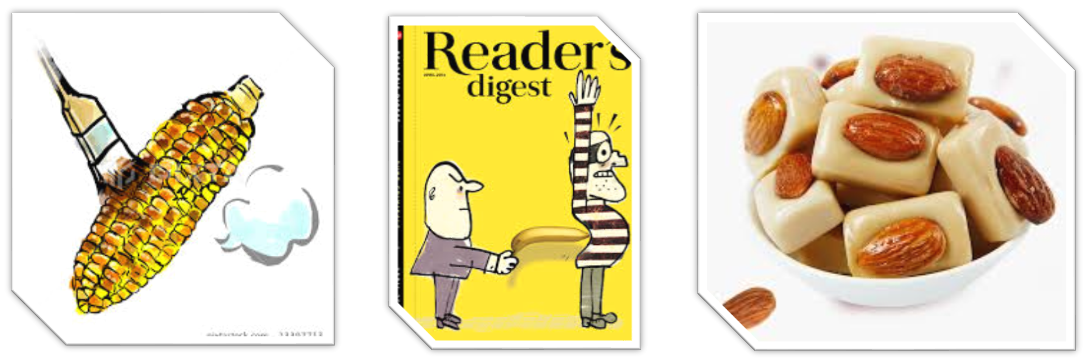
Deities: gods and goddesses
Cows low: the ‘moo’ sound made by cows
Marzipan: a sweet made with grated almonds
Brazier: open stove
Wash down: to drink something after a meal to digest it
Nauseating: sickening
The writer describes Kathmandu - the city has many different things to offer. It is a business hub, has religious places with many shrines, deities decorated with flowers on the narrow busy streets. There are hawkers selling fruits, flutes, postcards for the tourists. You can find many shops selling imported cosmetics, film rolls which were used in the old cameras, chocolates, copper utensils and Nepalese antiques. Many different sounds can be heard like music from the radio, car horn, bicycle bells, moo sound of the cows and screaming vendors selling their wares. The writer bought a bar of marzipan, a corn on the cob which had been roasted on charcoal fire by a roadside vendor. He had garnished it with lemon juice, salt and chilli powder. He also bought some love story comics and a Reader’s Digest magazine too. After eating all the things, he drank coca cola which is an aerated drink and would help him digest the food easily.
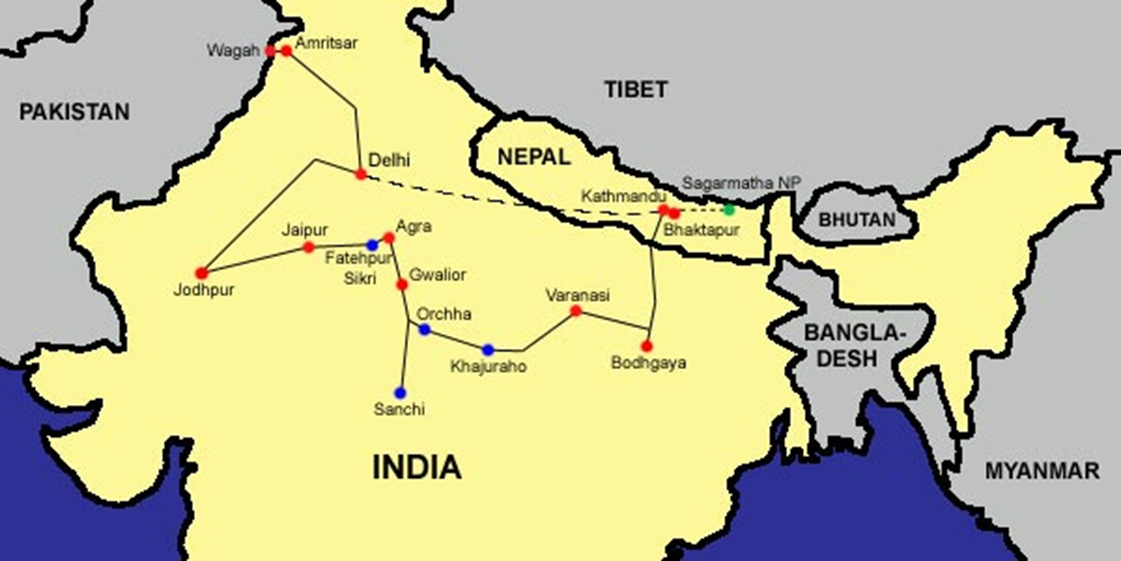
I consider what route I should take back home. If I were propelled by enthusiasm for travel per se, I would go by bus and train to Patna, then sail up the Ganges past Benaras to Allahabad, then up the Yamuna, past Agra to Delhi. But I am too exhausted and homesick; today is the last day of August. Go home, I tell myself: move directly towards home. I enter a Nepal Airlines office and buy a ticket for tomorrow’s flight.
Propelled: drive or push something forward
Per se: by itself
He thought of taking an adventurous route back home. It would be a bus or train journey till Patna. From there he would sail in a boat on the Ganga river and cross Benaras to reach Allahabad. From Allahabad, he would sail upon the Yamuna river, cross Agra and reach Delhi. He gave up this adventurous trip and decided to take a flight from Kathmandu to New Delhi as he was exhausted. He purchased a ticket from the Nepal Airlines office for the next day’s flight.
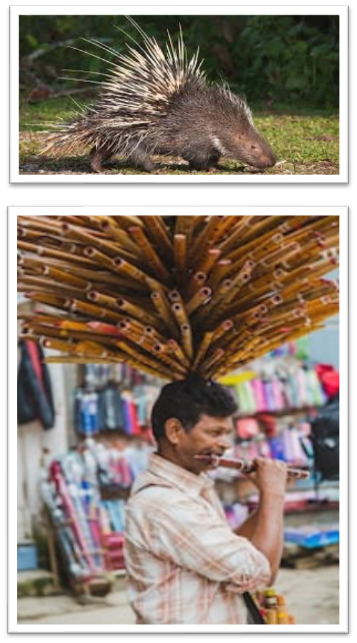
I look at the flute seller standing in a corner of the square near the hotel. In his hand is a pole with an attachment at the top from which fifty or sixty bansuris protrude in all directions, like the quills of a porcupine. They are of bamboo: there are cross-flutes and recorders. From time to time he stands the pole on the ground, selects a flute and plays for a few minutes. The sound rises clearly above the noise of the traffic and the hawkers’ cries. He plays slowly, meditatively, without excessive display. He does not shout out his wares. Occasionally he makes a sale, but in a curiously offhanded way as if this were incidental to his enterprise. Sometimes he breaks off playing to talk to the fruit seller. I imagine that this has been the pattern of his life for years.
Meditatively: thoughtfully
Offhanded: casual; not showing much interest in something
The writer saw a flute seller selling different bansuris. He was different from other hawkers. The was standing in a corner of the square outside the hotel. He was holding a pole which had an attachment on top of it. There were 50 60 flutes stuck in it. It resembled the thorny body of a porcupine. There were flutes made of bamboo and also cross flutes and recorders. The man would keep the pole on the ground and would play different flutes for short durations. He was calm, only the music of the flute could be heard. He played it meditatively and was not anxious to attract attention. At times he sold one flute but did not seem too interested to have a good sale. He would take breaks to talk to the fruit seller standing next to him. It seemed that this had been his routine since many years.
I find it difficult to tear myself away from the square. Flute music always does this to me: it is at once the most universal and most particular of sounds. There is no culture that does not have its flute — the reed neh, the recorder, the Japanese
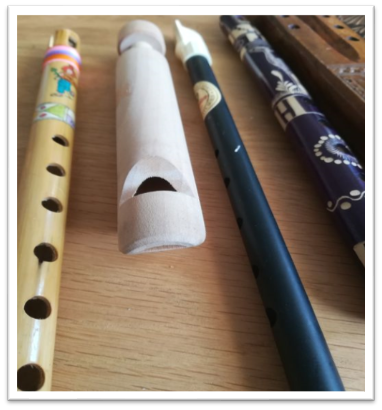
shakuhachi, the deep bansuri of Hindustani classical music, the clear or breathy flutes of South America, the high-pitched Chinese flutes. Each has its specific fingering and compass. It weaves its own associations. Yet to hear any flute is, it seems to me, to be drawn into the commonality of all mankind, to be moved by music closest in its phrases and sentences to the human voice. Its motive force too is living breath: it too needs to pause and breathe before it can go on.
Fingering: way of placing the fingers to play different notes
Compass: here, range
The music of the flute enchanted Vikram and he could not go away from there. He finds flute music to be the most universal sound. Flutes are played in many regions and have different names and varieties like the Shakuhachi in Japan, the deep bansuri of Hindustani classical music, the clear, breathy flutes in South America and the high - pitched flutes in China. Each flute has a different way to play it and the sound varies in pitch and depth. The sound that merges out of a flute is the most common sound, i.e., the sound of human voice. As the bansuri is played by the mouth, the player exhales into the flute to produce music and when he pauses to take a breath, the music of the flute also stops.
That I can be so affected by a few familiar phrases on the bansuri, surprises me at first, for on the previous occasions that I have returned home after a long absence abroad, I have hardly noticed such details, and certainly have not invested them with the significance I now do.
He is surprised that he is deeply influenced by the sounds of the bansuri. Never before has he noticed something in such depth as he noticed the flute seller and his wares.
Summary
In this chapter, the writer Vikram Seth describes his visit to Kathmandu, the capital of Nepal. He visited two temples there - one was the Pashupatinath temple which is a pilgrimage for the Hindus and the other was the Baudhnath temple which is a holy place for the Buddhists.
At the Pashupatinath temple, entry was restricted to Hindus. There was a lot of chaos with priests, tourists, pilgrims and animals flocking the place. The holy river Bagmati which flows near the temple was being polluted by washerwomen who were washing clothes in it, children who were bathing in it and residents who were throwing dry, withered flowers in it. Small shrines protruded on to the stone platform and it was said that when the platform would emerge completely, then the goddess would emerge out of it and end the Kaliyug. The scene at the Baudhnath temple was opposite to that at the Pashupatinath temple. It was a huge white coloured dome surrounded by an outer road. The place was quiet and calm. There was a Tibetan market outside the temple where Tibetan refugees were selling bags, garments and jewellery.
Kathmandu has a variety of things to offer. It has religious sanctity, it is a business hub and a tourist destination. There are shops selling postcards, antiques, chocolates, imported cosmetics, camera film rolls and utensils. A variety of sounds could be heard in the streets. The music blaring out of the radios, honking of the car horns, ringing of the bicycle bells, moo sounds of the cows as they obstructed the motorcycles passing by and the screaming vendors selling their wares. Vikram ate a marzipan bar, a corn on the cob roasted on charcoal fire and garnished with lemon juice, salt and chili powder and drank coca cola to digest it. He bought some love story comics and a Reader’s Digest too.
On his way back to Delhi, he considered going by an adventurous route. It would be a bus or train journey till Patna, then a boat ride up the Ganga river till Allahabad. It would be followed by a boat journey on the Yamuna river to Delhi. As he was tired, he chucked the idea and took a direct flight from Kathmandu to New Delhi the next day.
Outside his hotel, he saw a flute seller. He held a pole out of which many flutes popped out like the thorns on a porcupine’s body. The man stood quietly and would take out a different flute, play it for a couple of minutes and replace it with another one. Once in a while he would sell one of them mindlessly. He played the flute meditatively. He was unlike other hawkers who screamed to sell their wares. The writer got attracted to the music of the flute. Flutes are played in many regions of the world and they vary in appearance, names and the music that they produce. The sound of a flute resembles human voice as it is played by exhaling the breadth and its music also pauses when a person inhales a breadth.
Kathmandu by Vikram Seth/ Text Explanation

Question and Answers
Answer the following questions.
Q1. “I got him for her by accident.”
(i) Who says this?
(ii) Who do ‘him’ and ‘her’ refer to?
(iii) What is the incident referred to here?
A.
(i) The narrator says this.
(ii) ‘him’ refers to the bear and ‘her’ refers to the narrator’s wife.
(iii) The incident referred to here is when the narrator’s companion shot a bear dead and they found that the baby bear was alive. They caught the baby bear and took it along with them.
Q2. “He stood on his head in delight.”
(i) Who does ‘he’ refer to?
(ii) Why was he delighted?
A.
(i) ‘he’ refers to Baba.
(ii) Baba was delighted to see the narrator’s wife.
Q3. “We all missed him greatly: but in a sense we were relieved.”
(i) Who does ‘we all’ stand for?
(ii) Who did they miss?
(iii) Why did they nevertheless feel relieved?
A.
(i) ‘we all’ stands for the narrator, his wife, his son, the alsatian dogs and the tenant’s children.
(ii) They missed Baba.
(iii) They nevertheless felt relieved because Baba was a big bear now and keeping him at home was inconvenient for them.
Answer the following questions in 30 to 40 words each.
Q 1. On two occasions Bruno ate/drank something that should not be eaten/ drunk. What happened to him on these occasions?
A. In the first incident, Bruno ate the poison Barium carbonate which had been kept to kill rats. He was struck by an attack of paralysis. The narrator took him to a veterinary doctor who injected medicines twice to revive Bruno.
In the second incident, Bruno drank the old engine oil which the narrator had drained out of the sump of his old car in order to fight a termite attack. This did not have any adverse effect on Bruno.
Q 2. Was Bruno a loving and playful pet? Why, then, did he have to be sent away?
A. Yes, Bruno was a loving and playful pet. He was sent away because as he had grown into a big bear, it was not safe to keep him in an inhabited area as he could harm people. The narrator, his son and their friends convinced his wife who was particularly attached to Bruno and finally, it was sent to the zoo at Mysore.
Q 3. How was the problem of what to do with Bruno finally solved?
A. The problem of what to do with Bruno was finally solved by sending him off to the zoo at Mysore. They wrote a letter to the zoo in-charge at the zoo at Mysore. Upon his consent, Baba was packed in a cage and was sent away.
The Bond of Love/ NCERT Questions
Introduction
The story highlights the emotional bond between human beings and animals. The narrator’s wife shares affection with a wild bear and they get attached to each other shows that animals have feelings and reciprocate to love with warmth and affection.
Lesson and Explanation
I WILL begin with Bruno, my wife’s pet sloth bear. I got him for her by accident. Two years ago we were passing through the sugarcane fields near Mysore. People were driving away the wild pigs from the fields by shooting at them. Some were shot and some escaped. We thought that everything was over when suddenly a black sloth bear came out panting in the hot sun.
Panting: taking short, quick breaths
The narrator’s wife got a pet sloth bear as a pet due to an accident. Two years before the time when this story was written, the narrator and his friends were passing through sugarcane fields near Mysore. Farmers were driving out pigs from their fields by shooting at them. As it was apparently over, suddenly, a sloth bear appeared from the fields. It was breathing heavily due to running and the excessive heat.
Now I will not shoot a sloth bear wantonly but, unfortunately for the poor beast, one of my companions did not feel that way about it, and promptly shot the bear on the spot.
wantonly: for no good reason
The narrator says that he would never shoot at a bear without any reason but one of his companions did, and the bear was shot dead.

As we watched the fallen animal we were surprised to see that the black fur on its back moved and left the prostrate body. Then we saw it was a baby bear that had been riding on its mother’s back when the sudden shot had killed her. The little creature ran around its prostrate parent making a pitiful noise.
prostrate: lying on the ground facing downwards
The animal lay on the ground but a part of its fury black body moved. It was a baby bear that had been lying on the mother bear’s back. Now that the mother bear was dead, the baby got up and ran around the mother’s body, crying.
I ran up to it to attempt a capture. It scooted into the sugarcane field. Following it with my companions, I was at last able to grab it by the scruff of its neck while it snapped and tried to
scratch me with its long, hooked claws.
scooted: ran away
scruff of the neck: take hold of the back of the neck or collar suddenly and roughly
The narrator tried to catch the baby bear. The bear escaped into the sugarcane field. The group chased it and finally, the narrator caught hold of it from the back of its neck. The bear tried to scratch them with its hook - shaped claws.
We put it in one of the gunny-bags we had brought and when I got back to Bangalore I duly presented it to my wife. She was delighted! She at once put a coloured ribbon around its neck, and after discovering the cub was a ‘boy’ she christened it Bruno.
Christened it: named it
The group stuffed the bear in a gunny bag and took it to Bangalore (present day Bengaluru). The narrator gifted the bear cub to his wife. She was happy to have it, tied a coloured ribbon around its neck. As it was a male cub, she named it ‘Bruno’.

Bruno soon took to drinking milk from a bottle. It was but a step further and within a very few
days he started eating and drinking everything else. And everything is the right word, for he ate porridge made from any ingredients, vegetables, fruit, nuts, meat (especially pork), curry and rice regardless of condiments and chillies, bread, eggs, chocolates, sweets, pudding, ice-cream, etc., etc., etc. As for drink: milk, tea, coffee, lime-juice, aerated water, buttermilk, beer, alcoholic liquor and, in fact, anything liquid. It all went down with relish.
condiments: spices
Relish: great enjoyment
The bear drank milk from a bottle. After a few days, it started drinking and eating many things - everything and anything. The bear enjoyed eating and drinking.
The bear became very attached to our two Alsatian dogs and to all the children of the tenants living in our bungalow. He was left quite free in his younger days and spent his time in playing, running into the kitchen and going to sleep in our beds.
It became friendly with the narrator’s Alsatian dogs also. Also, with the tenant’s children who lived in the narrator’s bunglow. As the bear was left free, it played, ran around the house and even slept in the narrator’s bed.

One day an accident befell him. I put down poison (barium carbonate) to kill the rats and mice that had got into my library. Bruno entered the library as he often did, and he ate some of the poison. Paralysis set in to the extent that he could not stand on his feet. But he dragged himself on his stumps to my wife, who called me. I guessed what had happened. Off I rushed in the car to the vet’s residence. A case of poisoning! Tame Bear—barium carbonate—what to do?
Accidentally, Bruno drank the poison kept in the library to kill rats. He was paralysed and could not stand on its feet. As it reached the narrator’s wife, she called him and he realized what had happened. He took bruno to a veterinary doctor.
Out came his medical books, and a feverish reference to index began: “What poison did you say, sir?” “Barium carbonate”. “Ah yes—B—Ba—Barium Salts—Ah! Barium carbonate! Symptoms— paralysis—treatment—injections of . .. Just a minute, sir. I’ll bring my syringe and the medicine.” A dash back to the car. Bruno still floundering about on his stumps, but clearly weakening rapidly; some vomiting, heavy breathing, with heaving flanks and gaping mouth.
Floundering: struggling to move
Heaving: taking deep breaths
Flanks: the side of the body between the ribs and hips
Gaping: wide open
The doctor took out his medical books and searched the index for poisoning by Barium Carbonate. He took out a syringe and the medicine. Bruno was struggling to move, vomiting, breathing heavily and his mouth was open.
Hold him, everybody! In goes the hypodermic— Bruno squeals — 10 c.c. of the antidote enters his system without a drop being wasted. Ten minutes later: condition unchanged! Another 10 c.c. injected! Ten minutes later: breathing less stertorous— Bruno can move his arms and legs a little although he cannot stand yet. Thirty minutes later: Bruno gets up and has a great feed! He looks at us disdainfully, as much as to say, ‘What’s barium carbonate to a big black bear like me?’ Bruno is still eating.
Hypodermic: a long needle used to give an injection under the skin
Squeals: screams
Antidote: a medicine taken or given to counteract a particular poison
Stertorous: noisy
Disdainfully: disapprovingly
The doctor asked everyone to hold Bruno. As it screamed, the medicine was injected. As the condition did not change, another injection was given. Ten minutes later Bruno’s breathing eased, it could stand after thirty minutes and ate food. It gave them such a look which showed that it had been fine all the time and as if nothing had happened to it.

Another time he found nearly one gallon of old engine oil which I had drained from the sump of the Studebaker and was keeping as a weapon against the inroads of termites. He promptly drank the lot. But it had no ill effects whatever.
the sump: the base of an internal combustion engine, which serves as a reservoir of oil for the lubrication system
Studebaker: an old American car
In another incident, Bruno drank the used engine oil which the narrator had taken out of his Studebaker car and had kept to get rid of termites. That did not affect Bruno.

The months rolled on and Bruno had grown many times the size he was when he came. He had equalled the Alsatians in height and had even outgrown them. But was just as sweet, just as mischievous, just as playful. And he was very fond of us all. Above all, he loved my wife, and she loved him too! She had changed his name from Bruno, to Baba, a Hindustani word signifying ‘small boy’. And he could do a few tricks, too. At the command, ‘Baba, wrestle’, or ‘Baba, box,’ he vigorously tackled anyone who came forward for a rough and tumble. Give him a stick and say ‘Baba, hold gun’, and he pointed the stick at you. Ask him, ‘Baba, where’s baby?’ and he immediately produced and cradled affectionately a stump of wood which he had carefully concealed in his straw bed. But because of the tenants’ children, poor Bruno, or Baba, had to be kept chained most of the time.
Concealed: hidden
As the days passed, Bruno grew bigger and outgrew the alsatian dogs. Still, it was sweet, naughty and playful like before. He was fond of everyone. The narrator’s wife was very attached to Bruno and vice versa. She changed his name to ‘Baba’ which means a small boy in Hindustani language. Baba did some tricks - when he was ordered ‘Baba wrestle’ or ‘Baba box’, he would wrestle the person and overpower him. When commanded ‘Baba, hold gun’ he would point a stick at the person, as if ready to shoot him. When asked ‘Baba, where’s baby?’ he would take out a piece of wood and cradle it affectionately like a baby. He had hidden the piece of wood under the straw bed. As he had grown big, he was chained because he could be a threat to the tenant’s children.
Then my son and I advised my wife, and friends advised her too, to give Baba to the zoo at Mysore. He was getting too big to keep at home. After some weeks of such advice she at last consented. Hastily, and before she could change her mind, a letter was written to the curator of the zoo. Did he want a tame bear for his collection? He replied, “Yes”. The zoo sent a cage from Mysore in a lorry, a distance of eighty-seven miles, and Baba was packed off.
curator: here, a person in charge of the zoo
fretting: worried; unhappy; not relaxed
The narrator and his son advised to send Baba to the zoo. When his wife was adviced so by the friends too, she agreed and a letter was written to the zoo incharge to inquire if he would like to keep a bear at the zoo. He affirmed and then, Baba was sent to Mysore zoo, packed in a cage kept on a lorry. He travelled a distance of eighty - seven miles to reach the zoo.
We all missed him greatly; but in a sense we were relieved. My wife was inconsolable. She wept and fretted. For the first few days she would not eat anything. Then she wrote a number of letters to the curator. How was Baba? Back came the replies, “Well, but fretting; he refuses food too.”
Although everyone missed Baba but they were relaxed too. The narrator’s wife was disturbed, she wept and worried about Baba’s well - being. Initially, she did not eat or drink. She wrote a letter to the zoo incharge to inquire about Baba. He replied that Baba was also undergoing a similar situation like her.
After that, friends visiting Mysore were begged to make a point of going to the zoo and seeing how Baba was getting along. They reported that he was well but looked very thin and sad. All the keepers at the zoo said he was fretting. For three months I managed to restrain my wife from visiting Mysore. Then she said one day, “I must see Baba. Either you take me by car; or I will go myself by bus or train.” So I took her by car.
Restrain: stop
She would ask her friends visiting Mysore to visit Baba and check out on him. Everyone gave a similar report that Baba was fine but appeared thin and sad. The staff at the zoo said that he seemed worried. The narrator restrained his wife from visiting the zoo for three months. One day she said that she wanted to see Baba and if he would not take her, then she would go herself by train or bus. Finally, they went to see Baba at the zoo.
Friends had conjectured that the bear would not recognise her. I had thought so too. But while she was yet some yards from his cage Baba saw her and recognised her. He howled with happiness. She ran up to him, petted him through the bars, and he stood on his head in delight.
Conjectured: formed an opinion by guessing
Their friends had predicted that Baba would not recognize her and the narrator had thought so too but to his amazement, she was a few steps away from the cage when Baba saw her and recognized her. He screamed with happiness. She ran up to him, petted him and Baba was very happy to have her back.

For the next three hours she would not leave that cage. She gave him tea, lemonade, cakes, ice cream and what not. Then ‘closing time’ came and we had to leave. My wife cried bitterly; Baba cried bitterly; even the hardened curator and the keepers felt depressed. As for me, I had reconciled myself to what I knew was going to happen next.
She remained there for three hours. She fed Baba different things which were his favourites. As the zoo had to close, they had to leave. The narrator’s wife did not want to leave Baba and both of them cried bitterly. Even the zoo incharge was sad. The narrator was fine because he knew that the next step would be to take Baba back along to Bengaluru.
“Oh please, sir,” she asked the curator, “may I have my Baba back”? Hesitantly, he answered, “Madam, he belongs to the zoo and is Government property now. I cannot give away Government property. But if my boss, the superintendent at Bangalore agrees, certainly you may have him back.”
The wife requested the incharge that she wanted to take Baba back. He replied that the bear was Government property and that she needed permission from the Superintendent in Bengaluru.
There followed the return journey to Bangalore and a visit to the superintendent’s bungalow. A tearful pleading: “Baba and I are both fretting for each other. Will you please give him back to me?” He was a kind-hearted man and consented. Not only that, but he wrote to the curator telling him to lend us a cage for transporting the bear to Bangalore.
They returned to Bengaluru and visited the Superintendent at his bungalow. She cried and requested that both of them had been worrying for each other. She requested to have Baba back. The Superintendent was a kind - hearted man and he accepted her request. He wrote to the zoo incharge to arrange a cage for transporting Baba to Bengaluru.
Back we went to Mysore again, armed with the superintendent’s letter. Baba was driven into a small cage and hoisted on top of the car; the cage was tied securely, and a slow and careful return journey to Bangalore was accomplished.
Hoisted: raised by means of ropes or pulleys
Accomplished: completed
They went to Mysore with the Superintendent’s letter. Baba was put in a cage and the cage was kept on the top of the car. It was tied securely and they returned to Bengaluru.
Once home, a squad of coolies were engaged for special work in our compound. An island was made for Baba. It was twenty feet long and fifteen feet wide, and was surrounded by a dry pit, or moat, six feet wide and seven feet deep. A wooden box that once housed fowls was brought and put on the island for Baba to sleep in at night. Straw was placed inside to keep him warm, and his ‘baby’, the gnarled stump, along with his ‘gun’, the piece of bamboo,
both of which had been sentimentally preserved since he had been sent away to the zoo, were put back for him to play with.
Squad: team
Gnarled: rugged, twisted
At their home in Bengaluru, a team of workers was employed to execute some work in the backyard. As Baba was a full - grown bear, he had to be kept isolated. So, an island which was twenty feet long and fifteen feet wide was built. It was surrounded by a dry pit which was six feet wide and seven feet deep. (You must have seen similar islands in the zoo where bears are kept). It was made like this because the bear would not be able to cross the pit over to areas that were inhabited by people as it could be a threat to them. Things which were used by Baba had been kept securely. These were kept on the island. They were a wooden box which was previously used to keep cocks and hens and would now be used by Baba to sleep in at night. Straw was kept in the box to keep him warm. The piece of wood which Baba cradled like a baby, the stick that he used to point a gun were also placed on the island so that he could play with them.
In a few days the coolies hoisted the cage on to the island and Baba was released. He was delighted; standing on his hind legs, he pointed his ‘gun’ and cradled his ‘baby’. My wife spent hours sitting on a chair there while he sat on her lap. He was fifteen months old and pretty heavy too!
When the place was ready, the workers placed the cage on the island and Baba was removed from it. He was happy to be free, stood on his back legs, pointed the stick and cradled the piece of wood. The narrator’s wife spent many hours with him as he lay in her lap although he was fifteen months old and was quite heavy in weight.
The way my wife reaches the island and leaves it is interesting. I have tied a rope to the overhanging branch of a mango tree with a loop at its end. Putting one foot in the loop, she kicks off with the other, to bridge the six-foot gap that constitutes the width of the surrounding pit. The return journey is made the same way. But who can say now that a sloth bear has no sense of affection, no memory and no individual characteristics?
The narrator’s wife visits Baba frequently and the way in which she reaches and leaves the island is interesting. They have a rope tied to a mango tree with a loop at one end. She would place one foot in the loop and kick off with the other. This way she would fly in the air to cover the six foot long distance to reach the island. She would make the return trip in a similar way. On seeing the affection shared by Baba and the narrator’s wife, we can conclude that animals have emotions, they remember people and all of them have individual qualities just like human beings have.
Summary
In the story, the narrator highlights the emotional bond shared by his wife and their pet bear Bruno. He got the baby bear in an accident and presented it to his wife. She named the bear ‘Bruno’ and treated it like a baby. The bear was fed milk with a bottle and later it started eating different food items. He enjoyed eating and drinking everything and anything. Bruno was attached to everyone including their tenant’s children and their pet Alsatian dogs. It would play, run around the house and even sleep in their bed.
One day, accidentally, it ate a poison - Barium carbonate which had been kept in the library to kill mice and rats. Bruno was under a fit of paralysis and was taken to a veterinary doctor. He was injected twice and finally, revived. After a while, Bruno resumed eating normally. In another incident, he drank a gallon of old engine oil which the narrator had kept to fight a termite attack. This did not have any ill - effect on Bruno.
As days passed, Bruno grew bigger but remained as sweet and playful. The narrator’s wife changed his name to ‘Baba’ which was a Hindustani word for ‘a small boy’. He had learned a few tricks too. When commanded ‘Baba, wrestle’ or ‘Baba, box’, he would tackle and overpower the person. When ordered ‘Baba, hold gun’ he would point a stick at the person. When asked ‘Baba, where’s baby?’ he would take out the piece of wood and would cradle it affectionately like a baby. As he was big now, he had to be chained because he could harm the tenant’s children.
The narrator, his son and their friends advised the narrator’s wife to send Baba to a zoo as he was too big to be kept as a pet. She gave in and finally, after taking consent from the zoo incharge, they packed Baba in a cage and sent him to the zoo at Mysore. Everyone missed him but felt relieved as it was not comfortable to keep him at home. The narrator’s wife missed Baba immensely. She cried and worried about him. She wrote letters to the zoo incharge to ask about Baba’s well - being. They replied that Baba was fine but did not eat and remained sad much like her. She would ask her friends visiting Mysore to visit Baba. Everyone said that he was sad and appeared thin. After three months had passed, the narrator’s wife convinced him to take her to meet Baba. Everyone had predicted that the bear would not recognize her but she had not even reached the cage when Baba recognised her. He stood on his two paws and was delighted to see her. She petted Baba and fed him his favourite food. She spent three hours there until the visiting hours ended and left teary - eyed. She requested the zoo incharge to allow them to take Baba back for which they had to take permission from the Superintendent in Bangalore. As they got the required permission, Baba was put in a cage, the cage kept on top of their car and Baba was brought back home.
They got a special island made for Baba to live on. It was surrounded by a deep dry pit. Baba was provided with his belongings, a box to sleep in, straw to keep him warm, his stick and piece of wood to play with.
The narrator’s wife would visit Baba on the island by swinging on a rope tied to a mango tree. She would make the big bear sit in her lap for hours and would pat him affectionately.