Lesson and Explanation
I WAS born into a middle-class Tamil family in the island town of Rameswaram in the erstwhile Madras State.
erstwhile: former
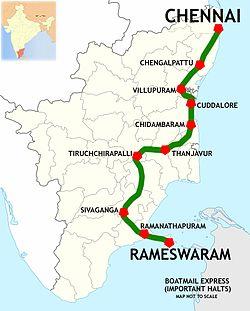
A.P.J Abdul Kalam was born into a middle-class Tamil family and his place of birth - Rameswaram is an Island town in the state of Tamil Nadu, in the Bay of Bengal. Today, we know this state as Tamil Nadu but when he was born, at that time the state was known as Madras state.
My father, Jainulabdeen, had neither much formal education nor much wealth; despite these disadvantages, he possessed great innate wisdom and a true generosity of spirit.
innate: inborn; (a quality or feeling) in one’s nature
generosity of spirit: his soul sought to help others who were needy
APJ Abdul Kalam’s father’s name was Jainulabdeen. APJ says that his father was not very rich, he did not have wealth, he was not highly educated but despite these disadvantages, he had some other qualities- he was naturally very wise and was generous too.
He had an ideal helpmate in my mother, Ashiamma.
APJ’s mother’s name was Ashiamma. She used to help his father. She was a great support and help to him.
I do not recall the exact number of people she fed every day, but I am quite certain that far more outsiders ate with us than all the members of our own family put together.
APJ’s mother was also generous and kind hearted. Every day she used to feed a lot of people. She fed a greater number of people from outside than the total number of the members in their family.
I was one of many children — a short boy with rather undistinguished looks, born to tall and handsome parents.
undistinguished: ordinary or common
Abdul Kalam had many siblings and he describes himself that he had short height and common looks, he did not have any exceptional looks. On the contrary, his parents were very tall and handsome. They were good looking. APJ did not inherit their physical qualities.
We lived in our ancestral house, which was built in the middle of the nineteenth century. It was a fairly large pucca house, made of limestone and brick, on the Mosque Street in Rameswaram.
Pucca House means a house made of bricks, cement and limestone.
APJ Abdul Kalam’s ancestral house was very old. It was built in the nineteenth century. It was a pucca house, which was made of bricks and limestone. It is located on the Mosque Street in Rameswaram.
My austere father used to avoid all inessential comforts and luxuries. However, all necessities were provided for, in terms of food, medicine or clothes. In fact, I would say mine was a very secure childhood, both materially and emotionally.
austere: simple, strict and severe
secure: safe
Materially means in terms of things like clothes food, medicine
emotionally means in terms of love and affection.
APJ’s father was very simple but he was strict also. He wanted to live his life in a simple way and he used to teach his children not to waste money on unnecessary things. APJ says that his father used to avoid any kind of inessential comfort and luxuries. He provided them all the necessary things like food, clothes and medicines. APJ says that his parents fulfilled all his needs - whether it was any tangible thing, or their love and affection. This shows that he has the quality of gratitude. APJ is thankful to his parents for whatever they did for him.
The Second World War broke out in 1939, when I was eight years old.
APJ was eight years old when the second world war broke in the year 1939. So, we can calculate that he was born in the year 1931.

For reasons I have never been able to understand, a sudden demand for tamarind seeds erupted in the market. I used to collect the seeds and sell them to a provision shop on Mosque Street. A day’s collection would fetch me the princely sum of one anna.
tamarind seeds: kind of fruit
princely sum: generous amount (here, ironic)
anna: an old Indian coin, worth about six paise
The demand for tamarind seeds increased in the market. APJ used to collect and sell the tamarind seeds to a provision shop located on Mosque street. He would earn a mere sum of one anna which equals six paise. When he addresses it as a ‘princely sum’ – something very great and valuable, he is being ironic as the amount was very meagre. At that time, this one anna meant a lot of money to him.
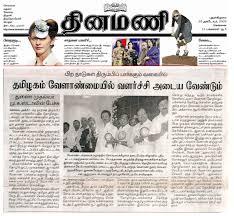
My brother-in-law Jallaluddin would tell me stories about the War which I would later attempt to trace in the headlines in Dinamani.
Dinamani: a tamil daily newspaper.
APJ Abdul Kalam’s brother –in-law Jallaluddin used to tell him the stories of the ongoing World War. Later, APJ used to read the newspaper ‘Dinamani’ and used to look for the news of the same stories.
Our area, being isolated, was completely unaffected by the War. But soon India was forced to join the Allied Forces and something like a state of emergency was declared.
isolated: Lonely, cut-off
Allied Forces: the armies of U.K., U.S.A. and Russia during the Second World War
Rameswaram was a small island town, far away from land. So, it was not affected by the World War in the beginning. But after some time, India had to join the war and combined with the Allied Forces. Then a state of emergency was declared in the country. (During emergency, the President’s rule is implemented in the country. It is like a curfew in the country. A. lot of privileges which are given to the people are withdrawn.)
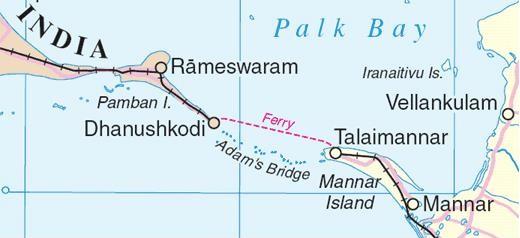
The first casualty came in the form of the suspension of the train halt at Rameswaram station. The newspapers now had to be bundled and thrown out from the moving train on the Rameswaram Road between Rameswaram and Dhanuskodi.
casualty: loss
suspension: end
halt: stop
The first impact of World War II on the people of Rameswaram was the cancellation of the train stoppage at the Rameswaram station. Earlier, the train which came from India used to stop at Rameswaram station and then, went further to Dhanushkodi. But now, the halt was cancelled, and the train went from India to Dhanushkodi without stopping at Rameswaram. With this, the newspaper bundle which used to come for Rameswaram, was thrown out of the moving train as it reached Rameswaram road.
That forced my cousin Samsuddin, who distributed newspapers in Rameswaram, to look for a helping hand to catch the bundles and, as if naturally, I filled the slot.
Samsuddin helped me earn my first wages.
filled the slot – fit into a place easily
APJ Abdul Kalam’s cousin Samsuddin, used to distribute the newspapers in Rameswaram. As the train stoppage was cancelled, and the newspaper bundle was thrown out of the moving train, he needed someone to help him catch it. APJ helped Samsuddin by catching the bundle and distributing the newspapers. In return, Samsuddin paid him a salary which was APJ’s first earning.
Half a century later, I can still feel the surge of pride in earning my own money for the first time.
pride: sudden increase in the feeling of satisfaction derived from one’s own achievements.
Half a century later means after a period of 50 years.
This incident happened 50 years ago. Even now, i.e. when he wrote the book, he could feel satisfied and proud of himself. APJ says that whenever someone earns his own money with his hard work, he feels it the same way as he did.
Every child is born, with some inherited characteristics, into a specific socio-economic and emotional environment, and trained in certain ways by figures of authority. I inherited honesty and self-discipline from my father; from my mother, I inherited faith in goodness and deep kindness and so did my three brothers and sister.
figures of authority: A person who had authority over another person; a person who has the power to give orders or make decisions.
Inherited means a characteristic, or a quality which you have got from your parents or ancestors.
socio-economic means in terms of money
For a child, the figure of authority is his parents and the next figure of authority can be his teacher- a person who has authority over the child. APJ is saying that whenever a child is born, he has some qualities which he acquires from the elders in his family. These depend upon the social status of the family and the environment at home. From his father, he inherited honesty and self discipline and from his mother he inherited faith in goodness and deep kindness. His siblings also inherited these qualities from their parents.
I had three close friends in my childhood — Ramanadha Sastry, Aravindan and Sivaprakasan. All these boys were from orthodox Hindu Brahmin families.
orthodox: strict
APJ had three best friends during his childhood. Their names are Ramanadha Sastry, Aravindan and Sivaprakasan. All of them belonged to very strict Hindu Brahmin families and were ardent followers of their religion.
As children, none of us ever felt any difference amongst ourselves because of our religious differences and upbringing. In fact, Ramanadha Sastry was the son of Pakshi Lakshmana Sastry, the high priest of the Rameswaram temple. Later, he took over the priesthood of the Rameswaram temple from his father; Aravindan went into the business of arranging transport for visiting pilgrims; and Sivaprakasan became a catering contractor for the Southern Railways.
As APJ was from a Muslim family, he says that during his childhood, all the children were so close to each other, that they never felt they belonged to different religions. Religion was not a barrier in their friendship. There is a very famous temple in Rameswaram- the Rameswaram temple. APJ’s best friend Ramanadha Sastry was the son of Pakshi Lakshmana Sastry, the priest of this temple. When these three friends grew up, Ramanadha Sastry took the priesthood of the Rameswaram temple, Arvindan started a business of transporting the pilgrims to and from the Rameswaram temple and Sivaprakasan became a catering contractor for the southern railway- he was in-charge of the catering for the railways.
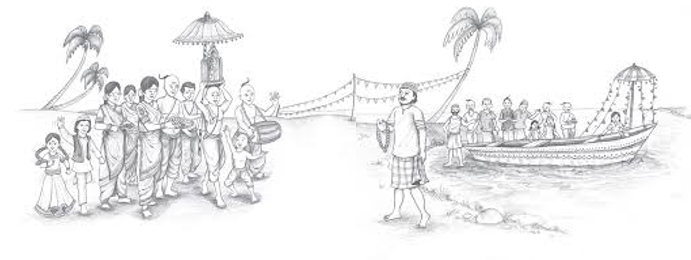
During the annual Shri Seetha Rama Kalyanam ceremony, our family used to arrange boats with a special platform for carrying idols of the Lord from the temple to the marriage site, situated in the middle of the pond called Rama Tirtha which was near our house.
Rama Kalyanam ceremony is known as Kalyanotsava. It means marriage festival. In South India, marriage is known as Kalyanam. So, Lord Ram and Seetha’s marriage is called Seetha Rama Kalyanam ceremony. It is the ceremony of the depiction of the marriage between Seetha and Rama.
Whenever the Shri Seetha Rama Kalyanam ceremony used to take place, APJ’s family also took part in it. They used to arrange the boats for it. They used to make a special platform on the boats on which the statue of Ram and Seetha were placed and transported from the temple to the marriage site which was in the middle of a pond named Rama Tirtha. This pond was near APJ’s house. When he was growing up, he never thought that there was any difference between Hindus and Muslims as they participated in the Hindu festivals wholeheartedly.
Events from the Ramayana and from the life of the Prophet were the bedtime stories my mother and grandmother would tell the children in our family.
APJ says that they listened to stories from the Ramayana and the life of the Prophet from their mother and grandmother as bedtime stories. So, they listened to stories of both Hindu Gods and Muslim Gods. There was no differentiation on grounds of religion.
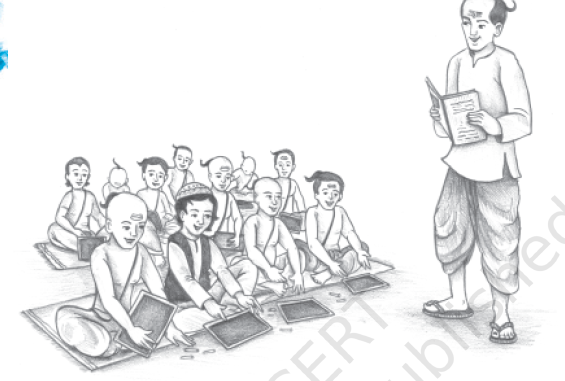
One day when I was in the fifth standard at the Rameswaram Elementary School, a new teacher came to our class. I used to wear a cap which marked me as a Muslim, and I always sat in the front row next to Ramanadha Sastry, who wore the sacred thread.
As APJ Abdul Kalam belonged to a Muslim family, he used to wear a cap on his head, which identified him as a Muslim. His friend Ramanadha Sastry who was the son of the priest of the Rameswaram temple belonged to a Hindu Brahmin family and used to wear the sacred thread worn by Brahmins. When these children were in class five, a new teacher came to their class. APJ Abdul Kalam recalls an incident which happened then -
The new teacher could not stomach a Hindu priest’s son sitting with a Muslim boy. In accordance with our social ranking as the new teacher saw it, I was asked to go and sit on the back bench. I felt very sad, and so did Ramanadha Sastry. He looked utterly downcast as I shifted to my seat in the last row. The image of him weeping when I shifted to the last row left a lasting impression on me.
could not stomach: could not tolerate
downcast: sad or depressed
This new teacher could not tolerate that a Hindu priest’s son was sitting next to a Muslim boy. He told APJ to go and sit on the last bench as he belonged to a lower rank of the society. Both the children felt very bad. When APJ changed his seat and went back and sat on the last bench, Ramanadha felt very bad. APJ still remembers the image of his friend Ramanadha crying. It left a lifelong impression on Kalam - of his friends’ feelings for him.
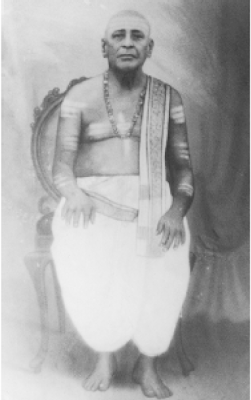
After school, we went home and told our respective parents about the incident. Lakshmana Sastry summoned the teacher, and in our presence, told the teacher that he should not spread the poison of social inequality and communal intolerance in the minds of innocent children. He bluntly asked the teacher to either apologise or quit the school and the island. Not only did the teacher regret his behaviour, but the strong sense of conviction Lakshmana Sastry conveyed ultimately reformed this young teacher.
summoned: called
bluntly: speaking in a direct and honest way, even if this offends or upsets people.
apologise: seek pardon
quit: to leave
conviction: a strong opinion or belief
convey: communicated
Both children went home and told their parents about this incident and Ramanadha’s father, Lakshmana Sastry called the new teacher and scolded him. He told him not to kill the children’s friendship by putting the venomous discrimination of caste and religious into their innocent minds. Lakshmana Sastry was very clear in himself. He told the teacher- either you ask sorry for the wrong you have done or else leave the school and Rameswaram town also. The teacher asked sorry for the mistake he had done and due to Laskshmana Sastry’s determination, his thoughts about religion and caste changed.
On the whole, the small society of Rameswaram was very rigid in terms of the segregation of different social groups. However, my science teacher Sivasubramania Iyer, though an orthodox Brahmin with a very conservative wife, was something of a rebel. He did his best to break social barriers so that people from varying backgrounds could mingle easily. He used to spend hours with me and would say, “Kalam, I want you to develop so that you are on par with the highly educated people of the big cities.”
rigid: strict
segregation: separation
orthodox: one who follows the religion strictly
conservative: traditional
rebel: in opposition
Mingle: interact with each other.
on par: at the same level
The division of society into four groups - Brahmins, Kshatriyas, Vaishyas, Shudras was strictly followed in Rameswaram. Abdul Kalam’s Science teacher Sivasubramania Iyer was a religious person, an orthodox Brahmin but was a rebellious type of person. He did not believe in distinction on the basis of the caste system. He worked very hard to break these social barriers. He wanted that people of different castes should interact with each other. He encouraged APJ Abdul Kalam to work hard so that he could be at the same level as the highly educated people who lived in big cities.
One day, he invited me to his home for a meal. His wife was horrified at the idea of a Muslim boy being invited to dine in her ritually pure kitchen. She refused to serve me in her kitchen. Sivasubramania Iyer was not perturbed, nor did he get angry with his wife, but instead, served me with his own hands and sat down beside me to eat his meal. His wife watched us from behind the kitchen door. I wondered whether she had observed any difference in the way I ate rice, drank water or cleaned the floor after the meal.
ritually pure: kept protected from all outside influences for the observances of religion
perturbed: upset
Sivasubramania Iyer’s wife belonged to a traditional and orthodox Brahmin family. She followed the religion very strictly and to keep the kitchen ‘pure’, no one from an inferior religion was allowed to enter the kitchen. When Sivasubramania Iyer called APJ Abdul Kalam for dinner at his home, his wife feared that a boy from a Muslim family would make her kitchen impure. She refused to serve him food in her kitchen. Sivasubramania Iyer was neither upset nor angry. He himself served food to APJ and sat down beside him to eat. His wife stood beside the kitchen door and looked at APJ while he was having food. AJP says that he doesn’t think that she felt there was any difference in the way he was having his food or the way he was drinking water or in the way he cleaned the floor after the meal. He wants to highlight that religion does not matter as it does not alter the way in which a person eats food.
When I was leaving his house, Sivasubramania Iyer’s invited me to join him for dinner again the next weekend. Observing my he Seethation, he told me not to get upset, saying,
“Once you decide to change the system, such problems have to be confronted.”.
he Seethation: doubt, delay
confronted: faced, tackled
When APJ was about to leave Sivasubramania Iyer’s house, he invited him for dinner once again. When Sivasubramania Iyer saw that APJ Abdul Kalam was he Seethant, he asked him not to be upset. He added that if he had decided to change the system, to go against the norms of the society, he had to be strong and brave and confront the situation.
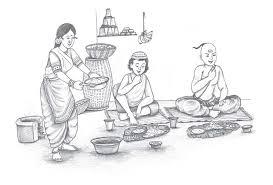
When I visited his house the next week, Sivasubramania Iyer’s wife took me inside her kitchen and served me food with her own hands
When he visited Sivasubramania Iyer’s home for dinner the next week, his wife made him sit in the kitchen and served him food with her own hands. This is the change that happened.
Then the Second World War was over and India’s freedom was imminent. “Indians will build their own India,” declared Gandhiji. The whole country was filled with an unprecedented optimism.

imminent: about to happen
Unprecedented: never done or know before.
Optimism: hope, cheer
When the Second World War got over in the year 1945, India was about to get freedom which happened in the year 1947. MK Gandhi, known as the ‘Father of the Nation’ was a crucial part of India’s Freedom struggle. He said that Indians would build their own India. The entire country was filled with hope and happiness Everyone was experiencing such a feeling which they had never felt before. Everyone was hoping that now they would get their freedom.
I asked my father for permission to leave Rameswaram and study at the district headquarters in Ramanathapuram. He told me as if thinking aloud, “Abul ! I know you have to go away to grow. Does the seagull not fly across the sun, alone and without a nest?”
APJ asked his father to allow him to go to Ramanathapuram, which was the district headquarters for higher studies. (Seagull is a bird.) In reply, his father told him that he knew that APJ needed to go away so that he could move ahead in life. He gave the example of a seagull which flies away in the sky all alone and does not have a nest. It means it does not have a home of its own as it keeps on flying from one place to another.

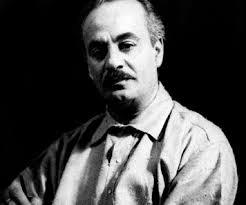
He quoted Khalil Gibran to my he Seethant mother, “Your children are not your children. They are the sons and daughters of Life’s longing for itself. They come through you but not from you. You may give them your love but not your thoughts. For they have their own thoughts.”
Longing: desire
For they have their own thoughts: Excerpt from “Your children’ – Poem by Khalil Gibran.
When APJ’s Mother came to know that he was about to leave home and wanted to go to Ramanathapuram for higher studies, she got upset. APJ’s father tried to calm her down and told her a few lines from a famous Poem titled ‘Your Children’, written by Khalil Gibran. He said that your children are not your children, they are the children of life. Don’t think that you can rule your children. They are a result of life’s desire for itself. They have their own thoughts. He asked her to give them freedom to fulfill their thoughts.
Summary
My Childhood” is an extract taken from the biography of APJ Abdul Kalam - ‘Wings of Fire’. He was a great scientist and also the 14th President of India. He was born in a middle - class Muslim family in 1931 in the island town of Rameswaram, Tamil Nadu. In his childhood he was greatly influenced by his parents, his teachers and his friends. His father, Jainulabdeen, was not highly educated but he was a generous and kind person. He was not rich but provided a secure childhood to Abdul and his siblings. Abdul inherited honesty and self-discipline from his father and faith in goodness and deep kindness from his mother.
Kalam earned his first wages by working as a helping hand to his cousin, Samsuddin, who distributed newspapers in Rameswaram.
In his childhood he had three close friends- Ramanadha Sastry,Aravindam and Sivaprakashan. Once when he was in fifth standard, a new teacher asked him not to sit in the front row along with the high caste Brahmin boys. Abdul found Ramanadha Sastry weeping as he went to the last row. This made a lasting impression on Abdul.
Abdul was also greatly influenced by his science teacher, Sivasubramania Iyer. He learnt the lesson of breaking social barriers from him. Iyer invited him to his home for a meal. His wife refused to serve food to a Muslim boy in her pure kitchen. Iyer served him with his own hands and sat down beside him to eat his meal. He convinced his wife to serve meal with her own hands and thus was successful in changing her conservative attitude.
For higher education, Abdul Kalam sought permission from his father to leave Rameswaram and study at the district headquarters in Ramanathapuram. His father said that Abdul had to go a long way in life just like a seagull bird which flies long distances. He calmed down APJ’s reluctant mother by quoting Kahlil Gibran’s poem ‘Your children’. He said that her children could not be dominated by her because they had their own thoughts. They did not belong to her but were a result of life’s desire for itself. He asked her to give them freedom to fulfil their thoughts.
Question and Answers
Answer these questions in one or two sentences each.
1. Where was Abdul Kalam’s house?
A. Abdul Kalam’s house was located on the Mosque Street in the town of Rameswaram in Tamil Nadu state.
2. What do you think Dinamani is the name of? Give a reason for your answer.
2. Dinamani is the name of a newspaper. It is a vernacular daily, printed in Tamil language. I think so because Kalam says that he traced the stories of the war in the headlines of the Dinamani.
3. Who were Abdul Kalam’s school friends? What did they later become?
A. During his childhood, Abdul Kalam had three friends. Their names are Ramanadha Sastry, Aravindan and Sivaprakasan. When they grew up, Ramanadha Sastry became the priest of the Rameswaram temple, Aravindan started a business of transporting pilgrims to and from the Rameswaram temple and Sivaprakasan became a caterer for the railways.
4. How did Abdul Kalam earn his first wages?
A. Abdul Kalam earned his first wages by catching the bundle of newspapers thrown out of the moving train at the Rameswaram station. He helped his cousin in distributing newspapers in Rameswaram.
5. Had he earned any money before that? In what way?
A. When the second World War started, there was a great demand for tamarind seeds. Kalam would collect them and sell them to a grocery store located on Mosque street. He would earn an anna which was a meagre sum but for him, it was a handsome sum of money.
Answer each of these questions in a short paragraph (about 30 words)
1. How does the author describe: (i) his father, (ii) his mother, (iii) himself?
A. (i) Kalam’s father’s name was Jainulabdeen. He was not educated and was not a wealthy man. Kalam says that despite this, his father possessed innate wisdom, honesty and was a generous man. He did not believe in wasting money on luxuries but provided them with all the necessities of life like food, clothing and medicine.
(ii) Kalam’s mother’s name was Ashiamma. She supported her husband in his decisions. She was a kind – hearted woman. Kalam recollects that his mother would feed meals to numerous people. He inherited faith in goodness and deep kindness from her.
(iii) Kalam was short and had ordinary looks while his parents were tall and looked handsome. He was brought up in a secure atmosphere. He grew up to become and honest and self – disciplined man. He believed in goodness and deep kindness.
2. What characteristics does he say he inherited from his parents?
A. Kalam’s inherited honesty and self – discipline from his father. His mother imbibed in him faith in goodness and deep kindness.
Discuss these questions in class with your teacher and then write down your answers in two or three paragraphs each.
1. “On the whole, the small society of Rameswaram was very rigid in terms of the segregation of different social groups,” says the author.
(i) Which social groups does he mention? Were these groups easily identifiable (for example, by the way they dressed)?
A. The social groups mentioned by Kalam were the Hindu Brahmins and the Muslims. Yes, these groups were easily identifiable by the way they dressed. As Kalam was a Muslim, he wore a cap which distinguished him from his Hindu Brahmin friends who wore the sacred thread.
(ii) Were they aware only of their differences or did they also naturally share friendships and experiences? (Think of the bedtime stories in Kalam’s house; of who his friends were; and of what used to take place in the pond near his house.)
A. No, they were not aware of any differences. Kalam and the other children listened to bedtime stories from their mother and grandmother. These were from both the Ramayana and from the life of Prophet. The family participated in the Hindu festival of Shree Seetha Rama Kalyanam by arranging boats for transporting the idols from the temple to the pond located near their house.
(iii) The author speaks both of people who were very aware of the differences among them and those who tried to bridge these differences. Can you identify such people in the text?
A. The people who were aware of these differences were the young teacher who came to teach Kalam’s class in fifth standard. He ordered Kalam to sit on the last bench as he belonged to a lower caste. His science teacher Sivasubramania Iyer’s wife was an orthodox Hindi Brahmin. She refused to serve him food as she felt hat his presence would render the kitchen impure.
The people who bridged these differences were Ramanadha Sastry’s father Lakshmana Sastry and Sivasubramania Iyer. Lakshmana Sastry was the priest of the Rameswaram temple. He scolded the young teacher and asked him to apologise for sowing the seeds of religious discrimination into the innocent minds of the children. Upon his wife’s refusal to serve, Sivasubramania Iyer served food to Kalam and sat beside him to eat which reformed his wife.
2. (i) Why did Abdul Kalam want to leave Rameswaram?
A. Abdul Kalam wanted to leave Rameswaram and go to Ramanathapuram for higher studies.
(ii) What did his father say to this?
A. His father said that he knew Kalam had to leave home as he had to fulfil his dreams. He gave the example of the Seagull bird which flies endlessly over long distances and does not have a nest too. He pacified Kalam’s mother by quoting a few lines from the poem ‘Your children’ by Khalil Gibran. He said that her children were not her possession but were life’s desire for itself. She should not impose her thoughts on them but should allow them to fulfil their thoughts.
(iii) What do you think his words mean? Why do you think he spoke those words?
A. Abdul Kalam’s father’s words had a deep meaning. He inspired Kalam to follow his dreams, to fly high like the seagull. He wanted him to pursue higher studies and so, allowed him to go to Ramanathapuram. He explained to Kalam’s mother to allow him to go and pursue higher education. He spoke these words to encourage Abdul Kalam and to control the emotional attachment of his mother.
Reference: Success CD
<<<<<<<<<<<<<<<<<<<<<<<<<<<<<<<<< End >>>>>>>>>>>>>>>>>>>>>>>>>>>>>>>>>>
My Childhood By APJ Abdul Kalam

Change this direct speech into reported speech:
1. “He works in a bank”
She said ______________________________________________________
2. “We went out last night”
She told me ______________________________________________________
3. “I’m coming!”
She said ______________________________________________________
4. “I was waiting for the bus when he arrived”
She told me ______________________________________________________
5. “ I’d never been there before”
She said ______________________________________________________
6. “I didn’t go to the party”
She told me ______________________________________________________
7. “Lucy’ll come later”
She said ______________________________________________________
8. “He hasn’t eaten breakfast”
She told me ______________________________________________________
9. “I can help you tomorrow”
She said ___________________________________________________________
© 2007 perfect-english-grammar.com May be freely copied for personal or classroom use.
10. “You should go to bed early”
She told me ______________________________________________________
11. “I don’t like chocolate”
She told me ______________________________________________________
12. “I won’t see you tomorrow”
She said ______________________________________________________
13. “She’s living in Paris for a few months”
She said _____________________________________________________
14. “I visited my parents at the weekend”
She told me ______________________________________________________
15. “She hasn’t eaten sushi before”
She said ______________________________________________________
16. “I hadn’t travelled by underground before I came to London”
She said ______________________________________________________
17. “They would help if they could”
She said ______________________________________________________
18. “I’ll do the washing-up later”
She told me ______________________________________________________
19. “He could read when he was three”
She said ______________________________________________________
20. “I was sleeping when Julie called”
She said ______________________________________________________
Reported Speech Homework for September 21,2018

Introduction to the poem
‘A legend of the Northland’ is a ballad. A ballad is a poem narrating a story in short stanzas. Ballad is such kind of poem which tells a story in short stanzas and in the poem all the stanzas comprise four lines. In total, there are 16 stanzas in this poem and these stanzas will tell us a story. Ballads are a part of folk culture or popular culture and are passed on orally from one generation to the next. (Folk culture is a story of any area and is known as ballad). Folk culture comprises of traditional stories which are passed on from one generation to next generation.
This story is of the Northland area, the area which is near the North Pole. This exact place is not specified but ‘Northland’ means the area in the northernmost part of the earth i.e., near the North Pole. ‘Legend’ means a historical story, one which is very old and has been passed on from generation to generation.
Poem and Explanation
Away, away in the Northland,Stanza 1
Where the hours of the day are few,
And the nights are so long in winter
That they cannot sleep them through;
In the region around the North Pole (Northland), the duration of the day is very less because its position is such that the Sun’s rays reach for a very less time. When this area is experiencing winter season, the duration of night is very long, and the day time hours are very less. In line 4, ‘they’ refers to the people who live in this region. The poet says that the duration of the night time is so long that the people cannot sleep them through. If they go to bed, take a few hours of sleep and then, they wake up, it is still night time. He wants to emphasize on the fact that the duration of the night is very long.
Stanza 2
Where they harness the swift reindeer
To the sledges, when it snows;
And the children look like bear’s cubs
In their funny, furry clothes:
Sledges: a vehicle on runners for conveying loads or passengers over snow or ice, often pulled by draught animals.
To harness means to tie the reindeers with a rope to a sledge so that it can be used for transportation.
Swift: something which runs very fast
The Northland region experiences severe cold conditions. It is a snowy area. The reindeer is an animal which is found in this polar region. People tie the reindeers to sledges and then the reindeers pull the sledges. He adds that the children look like young ones of a bear because they wear funny looking clothes made of fur which is like the furry skin of a bear.
Stanza 3
They tell them a curious story —
I don’t believe ’tis true;
And yet you may learn a lesson
If I tell the tale to you.
Curious: strange
In line 1 ‘they’ refers to the parents or elders and ‘them’ refers to the children or the younger generation. The elders of the Northland region tell a strange and interesting story to the younger generation. The poet says that he doesn’t think that the story is true, but if he tells the story to the reader, maybe the reader could learn a lesson from it. The story gives an important message.
Stanza 4
Once, when the good Saint Peter
Lived in the world below,
And walked about it, preaching,
Just as he did, you know,
Saint Peter: an apostle of Christ, a disciple or follower of Jesus Christ
Preaching: to give a religious talk
The story is about Saint Peter. When Saint Peter used to live in the world and went around, giving religious lectures to the people just like all saints do, then an incident happened.
Stanza 5
He came to the door of a cottage,
In travelling round the earth,
Where a little woman was making cakes,
And baking them on the hearth;
hearth: fire place where you do cooking
When Saint Peter was moving around the world, giving religious lectures to the people, he reached the door of a cottage where a small woman was making cakes. She was baking the cakes in the fireplace.
Stanza 6
And being faint with fasting,
For the day was almost done,
He asked her, from her store of cakes,
To give him a single one.
faint: to be weak, famished
As Saint Peter had not eaten anything the entire day, he was very hungry and was feeling weak. So, he went to this woman who was baking cakes and he asked for one cake out of the many cakes that she had baked.
Stanza 7
So she made a very little cake,
But as it baking lay,
She looked at it, and thought it seemed
Too large to give away.
The woman was selfish. She did not give cake from her store. Instead, she started making a very small cake for Saint Peter. She did not want to share her things. But, when she put the cake for baking, she looked at it and thought that this cake was too big to be given to someone.
Stanza 8
Therefore she kneaded another,
And still a smaller one;
But it looked, when she turned it over,
As large as the first had done.
kneaded – to make dough from flour.
The little miser woman thought that the cake was too big to be given away. So, she started making another smaller cake. When she looked at that cake, she again felt that it was as big as the previous one. Again, she was not ready to give this smaller cake to Saint Peter.
Stanza 9
Then she took a tiny scrap of dough,
And rolled and rolled it flat;
And baked it thin as a wafer —
But she couldn’t part with that.
scrap: small amount
The third time, she took a very small amount of dough and rolled it. The poet says that she rolled and rolled to lay emphasis on the fact that she rolled the dough and made it very thin like a wafer and baked it. But she was so greedy that she couldn’t give that thin piece of bread to the saint.
Stanza 10
For she said, “My cakes that seem too small
When I eat of them myself
Are yet too large to give away.”
So she put them on the shelf.
The woman reasoned that, when she ate the cakes, she felt that they were very small but if she had to give them to someone, she felt that they were too big to be given away. She put all the cakes on the shelf of her kitchen and she did not give any cake to Saint Peter.
Stanza 11
Then good Saint Peter grew angry,
For he was hungry and faint;
And surely such a woman
Was enough to provoke a saint.
provoke: cause to get angry
Saint Peter became angry. He was very hungry, he was feeling very weak and the selfish woman was not ready to give him even a small cake. This behavior of the greedy woman angered the saint.
Stanza 12
And he said, “You are far too selfish
To dwell in a human form,
To have both food and shelter,
And fire to keep you warm.
dwell: to live
Saint Peter cursed the woman and said that she was very selfish. She did not deserve to live like a human being. He added that God had given her food, shelter, fire to keep warm but she had become selfish for all the resources she had. She did not want to share them with anybody.
Stanza 13
Now, you shall build as the birds do,
And shall get your scanty food
By boring, and boring, and boring,
All day in the hard, dry wood.”
scanty: very little
boring: make a hole in something with a tool or by digging.
Saint Peter cursed the woman that hence, she would become a bird because she did not deserve the human form. She shall become a bird and just like birds build their houses by boring into the wood and collect very little food by working hard the entire day, similarly, she would also work hard in the dry wood, all day and get little food and make a small place for herself to live in.
Stanza 14
Then up she went through the chimney,
Then up she went through the chimney,
Never speaking a word,
And out of the top flew a woodpecker,
For she was changed to a bird.
As soon as Saint Peter cursed the woman, she did not get a chance to speak for herself because that very moment, she flew up to the roof through the chimney and flew out in the form of a bird. Saint Peter’s curse had converted the woman into a bird.
Stanza 15
She had a scarlet cap on her head,
And that was left the same;
But all the rest of her clothes were burned
Black as a coal in the flame.
scarlet: brilliant red colour
When the woman turned into a bird, at that time she was wearing a red - coloured cap on her head. This cap was there on the bird’s head also, but the woman’s remaining clothes had burned and turned black in colour just like coal.
Stanza 16
And every country schoolboy
Has seen her in the wood,
Where she lives in the trees till this very day,
Boring and boring for food.
country: belonging to the countryside i.e. rural areas
People who live in the countryside, even the small children who go to school, seen this kind of bird in the woods. They see that she stays there all day and keeps on digging the wood with her beak, to collect her food. Whenever any child sees this kind of bird, then his elders tell him this story. They say that the bird used to be a woman earlier. She was very greedy and so, she was cursed by Saint Peter and turned into a bird. They get a teaching that they should not be greedy.
Summary
The poem is a legend about an old lady who angered Saint Peter because of her greed. The story goes’ on like this. One day, Saint Peter was preaching around the world and reached the door of a cottage where this woman lived. She was making cakes and baking them on a hearth. St. Peter was fainting with hunger. He asked the lady to give him a piece of cake. The cake that she was baking then appeared to be too big, so she did not give him that and instead, she baked another smaller one. That also appeared to be big so she did not give him that also. The second time she baked yet another smaller cake but found it too big to give away. In the third attempt, she took an extremely little scrap of dough and rolled it flat. She had it as thin as a wafer but was unable to part with that also. This angered St. Peter a lot. He said that she was not fit to live in human form and enjoy food and warmth. He cursed her and transformed her into a woodpecker bird who had to bore in hard, dry wood to get its scanty food. She can be seen in the trees all day boring and boring for food.
NCERT QUESTIONS WITH ANSWERS
Page No: 67
Thinking about the Poem
I.
1. Which country or countries do you think “the Northland” refers to?
2. What did Saint Peter ask the old lady for? What was the lady’s reaction?
3. How did he punish her?
4. How does the woodpecker get her food?
5. Do you think that the old lady would have been so ungenerous if she had known who Saint Peter really was? What would she have done then?
6. Is this a true story? Which part of this poem do you feel is the most important?
7. What is a legend? Why is this poem called a legend?
8. Write the story of ‘A Legend of the Northland’ in about ten sentences.
Answer 1. “The Northland” could refer to any extremely cold country in the Earth's north polar region, such as Greenland, the northern regions of Russia, Canada, Norway etc.
2. Saint Peter asked the old lady for one of her baked cakes to satisfy his hunger. The lady tried to bake a small cake for the saint.
3. He punished the lady by changing her into a woodpecker that built “as birds do” and gathered scanty food by boring in the “hard, dry wood” all day long.
4. The woodpecker gets her food by boring holes into trees.
5. No, the old lady would not have been so ungenerous if she had known who Saint Peter really was. Instead, she would have tried to please him with her cakes for the fulfillment of her greedy desires.
6. No, this not a true story; it is a legend. I feel that the point in the story where the old lady is changed into a woodpecker is the most important. This is because the punishment meted out to the lady teaches us the value of generosity and charity.
7. A 'legend' is a popular story from the past which is believed by many but one cannot prove whether it is true or not. It usually contains a message or a moral and is narrated to children. The poet himself says that he doesn't believe this tale to be true. This poem is called a 'legend' because it preaches generosity towards fellow beings.
8. Once Saint Peter stopped by an old lady's cottage because he was feeling hungry and weak after the day's fasting. The lady was baking cakes on the hearth. Since he was weak with fasting, he asked her for a cake from her store of cakes. The selfish lady tried to bake small cakes but each time they seemed too big for her to give away. Finally, she baked one that was as thin as a wafer. Unable to part with it too, she put it on a shelf and did not give any cake to the Saint. Saint Peter was very angry with her behaviour and said she was too selfish to live as a human and have food, shelter and a fire to keep her warm. He punished her by changing her into a woodpecker that would have to build a nest to live in, bore for food in the trunks of trees. Her clothes were burned and she was left with her scarlet cap on her head as she flew out through the chimney. Even today she still lives in the woods and is seen by all the country school boys.
1. 1. Let’s look at the words at the end of the second and fourth lines, viz., ‘snows’ and ‘clothes’, true’ and ‘you’, ‘below’ and ‘know’. We find that ‘snows’ rhymes with ‘clothes’, ‘true’ rhymes with ‘you’ and ‘below’ rhymes with ‘know’.
Answer
The rhyming words are: 'Few' and 'through' 'Earth' and 'hearth' 'Done' and 'one' 'Lay' and 'away' 'One' and 'done' 'Flat' and 'that' Myself and 'shelf' 'Faint' and 'saint' 'Form' and 'warm' 'Food' and 'wood' 'Word' and 'bird' 'Same' and 'flame' 'Wood' and 'food'
2. Go to the local library or talk to older persons in your locality and find legends in your own language. Tell the class these legends.
Answer
Echo was a nymph who talked too much. She was very fond of having the last word. One day she spoke rudely to the great Juno, who said that for this offence Echo should never use her voice again, unless to repeat what she had just heard, but since she was so very fond of last words, she might repeat the last words of others. This was almost as bad as if Juno had changed her into a parrot. Echo was very much ashamed, and hid herself in the forest. Narcissus, a young man who had hair as yellow as gold and eyes as blue as the sky, - a very rare thing in Greece, where most people were very dark, - used to hunt in the forest where Echo was hiding. As she was peeping out shyly from some cave or from behind a great tree, Echo often saw Narcissus, and she admired him very much. One day Narcissus became separated from his friends, and hearing something rustle among the leaves, he called out, "Who's here?" "Here," answered Echo. "Here I am. Come!" said Narcissus. "I am come," said Echo; and, as she spoke, she came out from among the trees. When Narcissus saw a stranger, instead of one of his friends as he had expected, he looked surprised and walked quickly away. After this, Echo never came out and allowed herself to be seen again, and in time she faded away till she became only a voice. This voice was heard for many, many years in forests and among mountains, particularly in caves. In their solitary walks, hunters often heard it. Sometimes it mocked the barking of their dogs; sometimes it repeated
Reference:
https://www.successcds.net/learn-english/class-9/a-legend-of-the-northland-class-9-cbse-english.html
A Legend of the Northland

NCERT QUESTIONS WITH ANSWERS
Page No: 60
Think about the Text
I. Discuss in pairs and answer each question below in a short paragraph (30 − 40 words).
1. “The sound was familiar one.” What sound did the doctor hear? What did he think it was? How many times did he hear it? (Find the places in the text.) When and why did the sounds stop?
Answer
The doctor lived in a room which was full of rats. He heard the sounds of the rats. There was a regular traffic of rats to and from the beam. He heard the sound thrice. The sound stopped suddenly as rats had seen a snake.
2. What two “important” and “earth-shaking” decisions did the doctor take while he was looking into the mirror?
The doctor took two "important" and "earth-shaking" while he was looking into the mirror First, he decided to shave daily and grow a thin moustache. Second, always to keep an attractive smile on his face.
3. “I looked into the mirror and smiled,” says the doctor. A little later he says, “I forgot my danger and smiled feebly at myself.”
What is the doctor’s opinion about himself when:
(i) he first smiles, and (ii) he smiles again?
In what way do his thoughts change in between, and why?
Answer
(i) When the doctor first smiles, he has an inflated opinion of himself, admiring his looks and profession.
(ii) In the second instance, the doctor smiles at his foolishness and helplessness. His thoughts change after his encounter with the snake— from being a proud doctor he moves on to accept his stupidity.
II. This story about a frightening incident is narrated in a humorous way. What makes it humorous? (Think of the contrasts it presents between dreams and reality. Some of them are listed below.)
1. (i) The kind of person the doctor is (money, possessions)
(ii) The kind of person he wants to be (appearance, ambition)
2.
(i) The person he wants to marry
(ii) The person he actually marries
3.(i) His thoughts when he looks into the mirror
(ii) His thoughts when the snake is coiled around his arm Write short paragraphs on each of these to get your answer.
Answer
1. (i) The doctor is a poor person. He has hardly any money. he lives in an unelectrified house. It is small rented room with plenty of rats living in it. He has just started his medical practice. So he is not a man of possessions or money.
(ii) The Person wants to be rich. he also would like to have good appearance. That's why he decides to grow a thin moustache.
2. (i) The doctor wants to marry a woman doctor with good medical practice and a lot of money. She would be fat as not to run after him and catch him.
(ii) He marries a thin reedy woman who has a gift of sprinter.
3. (i) His thoughts are full of joy and satisfaction. He decides to grow thin moustache and keep smiling always. He finds his smile attractive
(ii) He turned to stone. He sat like stone image in the flesh. However, his mind was very active. He felt the great presence of creator. He decides to write the words 'O God' outside his little heart.
<<<<<<<<<<<<<<<<<<<<<<<<<<<<<<<<< END >>>>>>>>>>>>>>>>>>>>>>>>>>>>>>>>>
The Snake and the Mirror

Page No: 51
2. Who had these opinions about Einstein?
(i) He was boring.
(ii) He was stupid and would never succeed in life.
(iii) He was a freak.
Answer
(i) Einstein’s playmates thought that he was boring.
(ii) Einstein’s headmaster thought that he was stupid and would never succeed at anything in life.
(iii) Einstein’s mother thought that he was a freak.
3. Explain what the reasons for the following are.
(i) Einstein leaving the school in Munich for good.
(ii) Einstein wanting to study in Switzerland rather than in Munich.
(iii) Einstein seeing in Mileva an ally.
(iv) What do these tell you about Einstein?
Answer
(i) Einstein left the school in Munich for good because he hated the school’s regimentation.
(ii) Einstein wanted to study in Switzerland rather than in Munich because it was a more liberal city. (iii) Einstein found in Mileva an ally because she, like him, disapproved of the “philistines” or the people who did not like art, literature or music.
(iv) These told about Einstein that he loved freedom. He was liberal and cultured person.
4. What did Einstein call his desk drawer at the patent office? Why?
Answer
Einstein called his desk drawer at the patent office the “bureau of theoretical physics”. This was because the drawer was where he used to store his secretly developed ideas.
5. Why did Einstein write a letter to Franklin Roosevelt?
Answer
Einstein wrote a letter to Franklin Roosevelt to warn about bomb effect and also wanted to encourage them to make a bomb to utilize its destruction potential.
6. How did Einstein react to the bombing of Hiroshima and Nagasaki?
Einstein was deeply shaken by the disaster in the Hiroshima and Nagasaki. He wrote a public missive to the United. He proposed the formation of a world government to stop the nuclear weapons.
7. Why does the world remember Einstein as a “world citizen”?
Einstein is remembered as a “world citizen” as much as a genius scientist because of his efforts towards world peace and democracy, and for his crusade against the use of arms.
8. Here are some facts from Einstein’s life. Arrange them in chronological order.
[ ] Einstein publishes his special theory of relativity.
[ ] He is awarded the Nobel Prize in Physics.
[ ] Einstein writes a letter to U.S. President, Franklin D. Roosevelt, and warns against Germany’s building of an atomic bomb.
[ ] Einstein attends a high school in Munich.
[ ] Einstein’s family moves to Milan.
[ ] Einstein is born in the German city of Ulm.
[ ] Einstein joins a university in Zurich, where he meets Mileva.
[ ] Einstein dies.
[ ] He provides a new interpretation of gravity.
[ ] Tired of the school’s regimentation, Einstein withdraws from school.
[ ] He works in a patent office as a technical expert.
[ ] When Hitler comes to power, Einstein leaves Germany for the United States.
Answer
[1] Einstein is born in the German city of Ulm.
[2] Einstein attends a high school in Munich.
[3] Einstein’s family moves to Milan.
[4] Tired of the school’s regimentation, Einstein withdraws from school.
[5] Einstein joins a university in Zurich, where he meets Mileva.
[6] He works in a patent office as a technical expert.
[7] Einstein publishes his special theory of relativity.
[8] He provides a new interpretation of gravity.
[9] He is awarded the Nobel Prize in Physics.
[10] When Hitler comes to power, Einstein leaves Germany for the United States.
[11] Einstein writes a letter to U.S. President, Franklin D. Roosevelt, and warns against Germany’s building of an atomic bomb.
[12] Einstein dies.
EXTRA QUESTIONS WITH ANSWERS WILL BE UPLOADED SHORTLY